SET IN STONE 2025![]()
To skip directly to project please scroll right to the bottom ︎︎︎
THE PROCESS:
Devlopment from Set in Stone (2024)
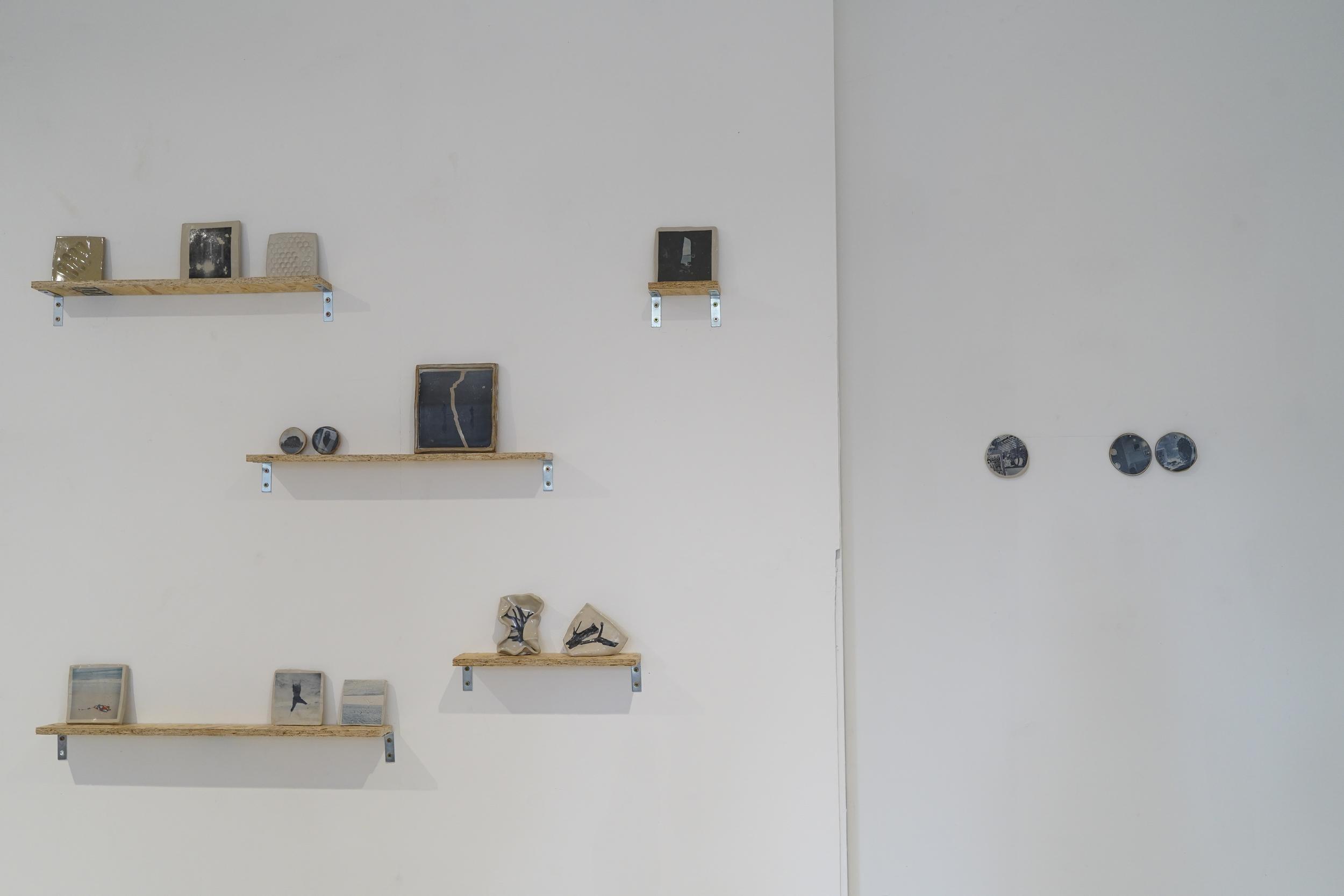
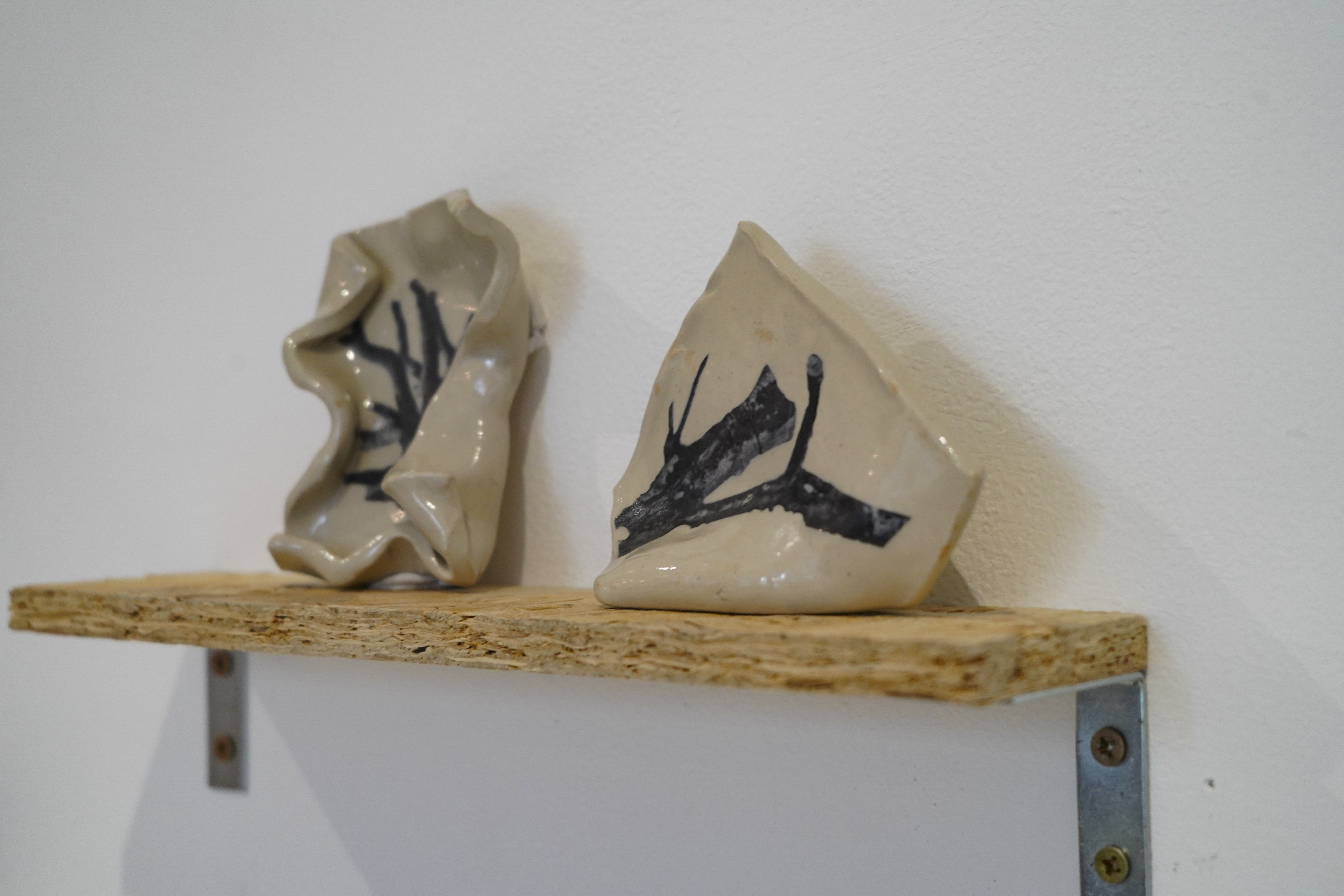
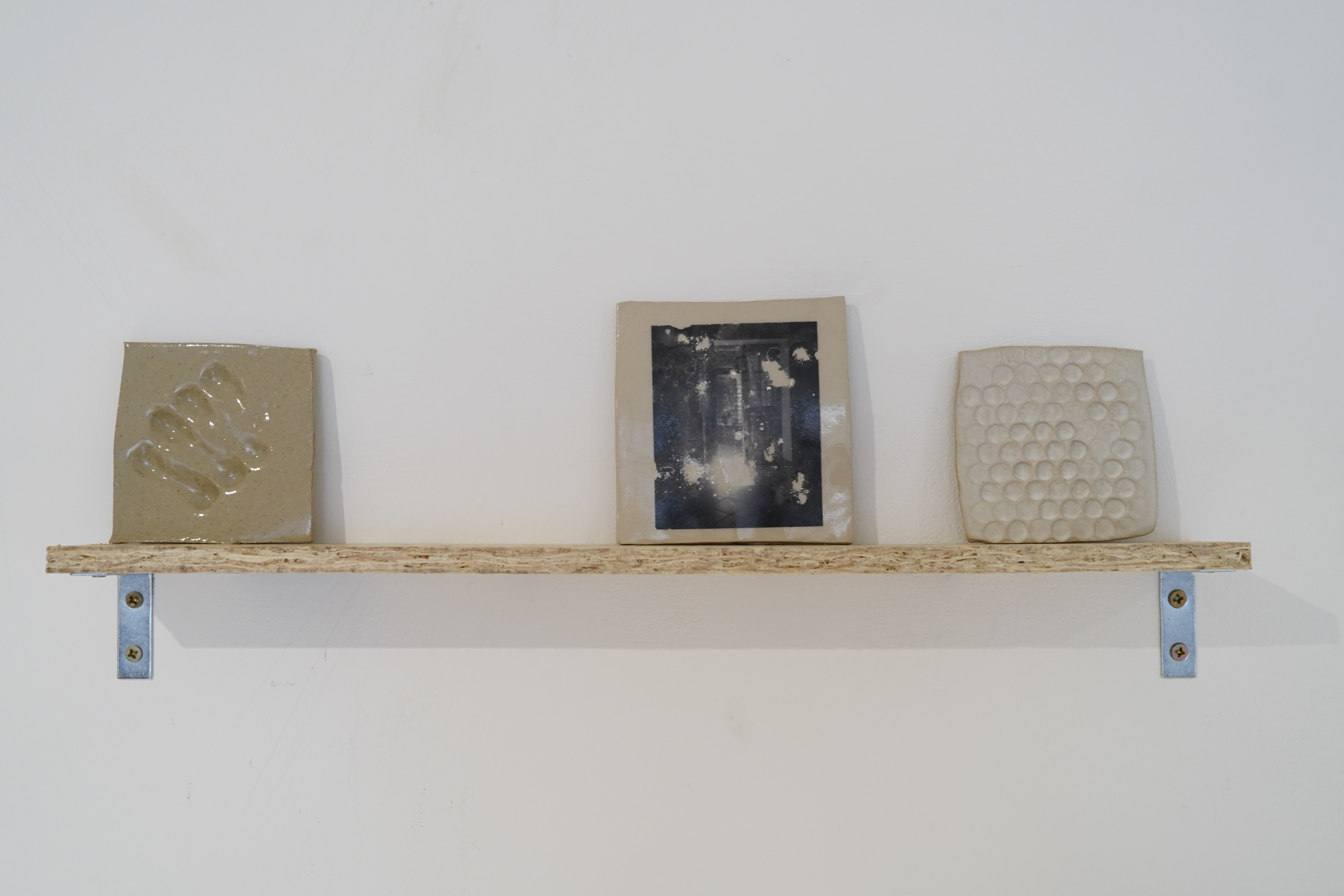
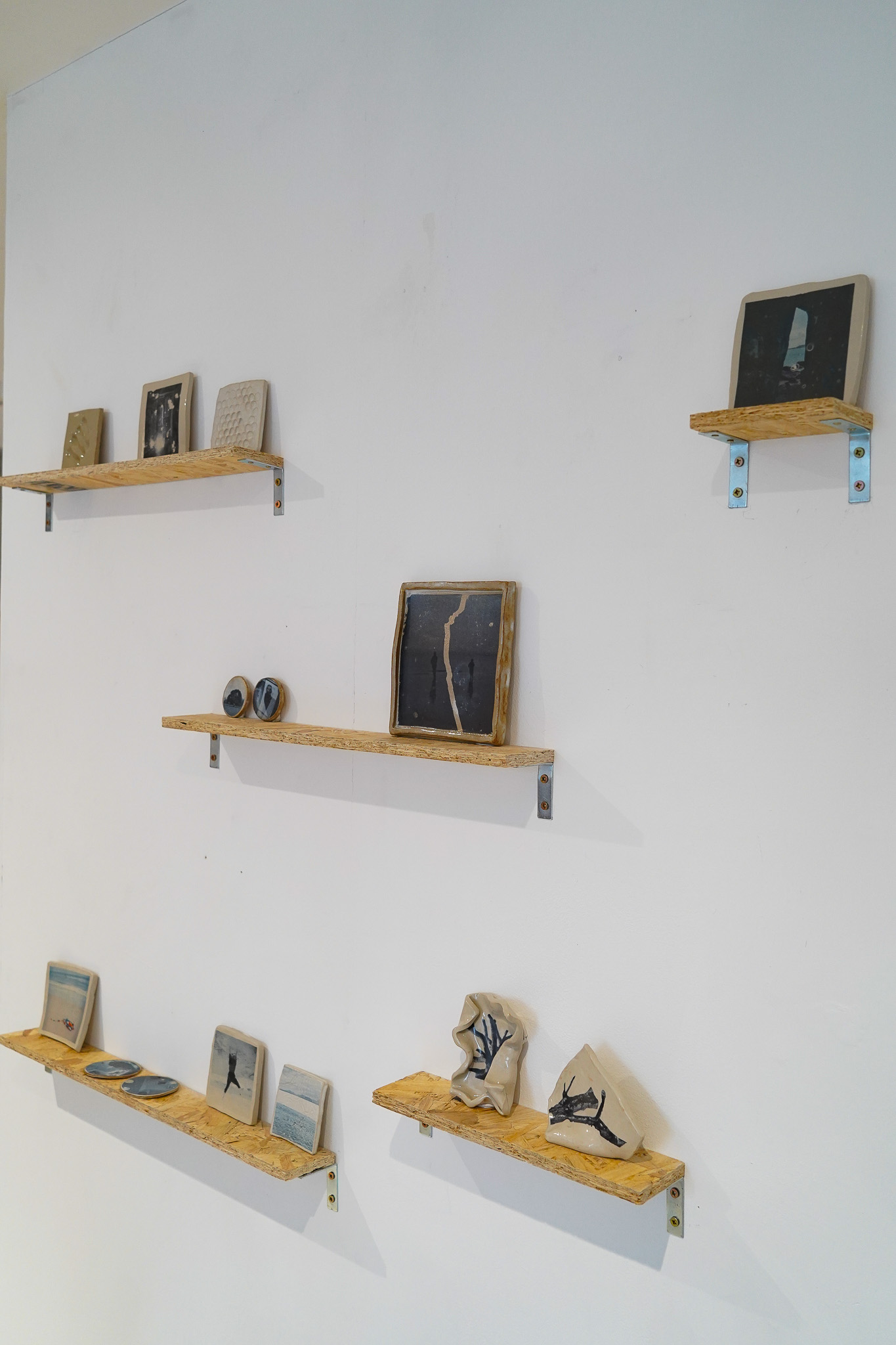
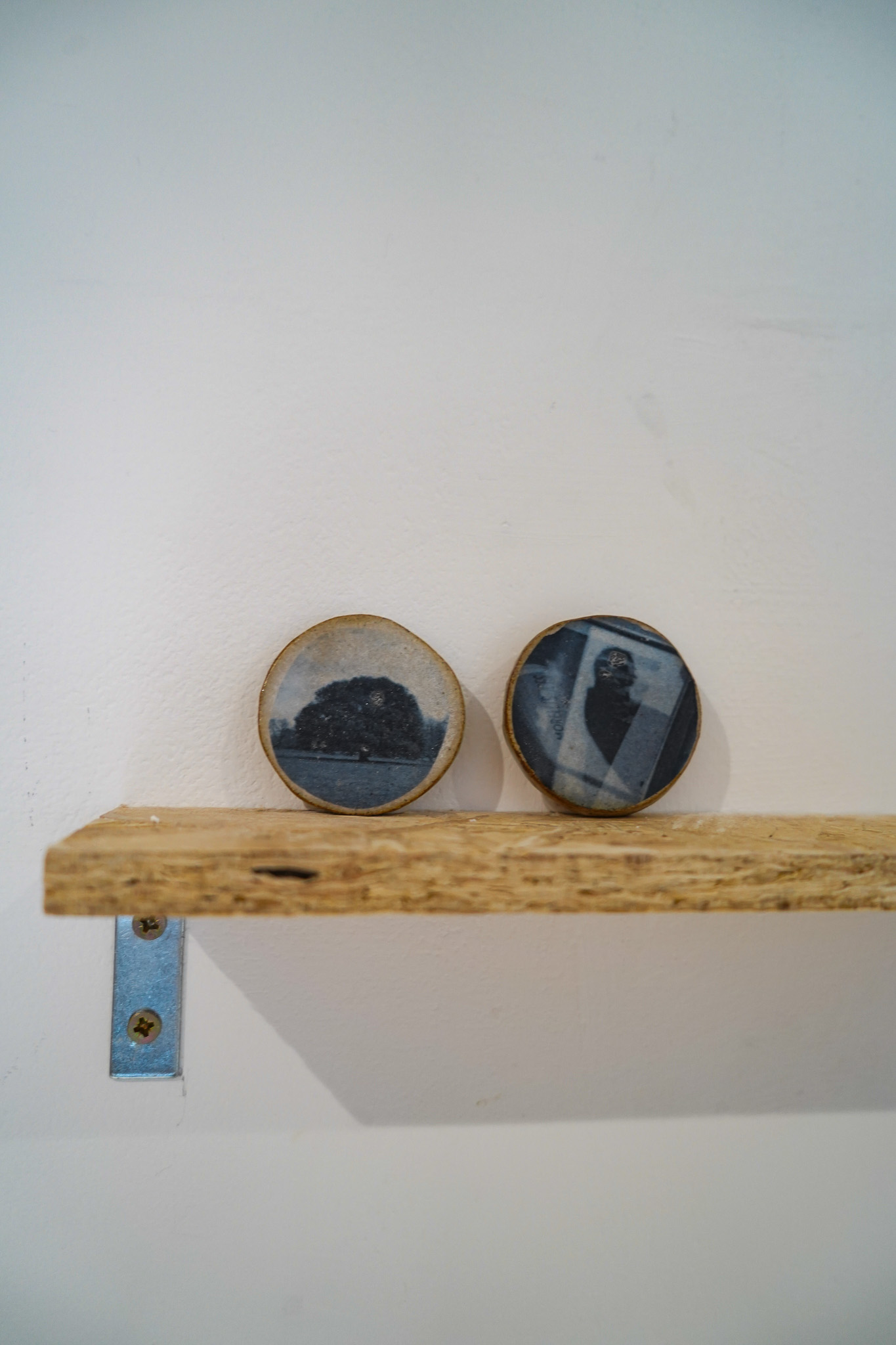
Ceramic stoneware pieces set with photographic decals.
Displayed on shelves, A to B Gallery
Ceramic stoneware pieces set with photographic decals.
Displayed on shelves, A to B Gallery
TESTING AND DEVELOPMENT
Exploratory Sculpture
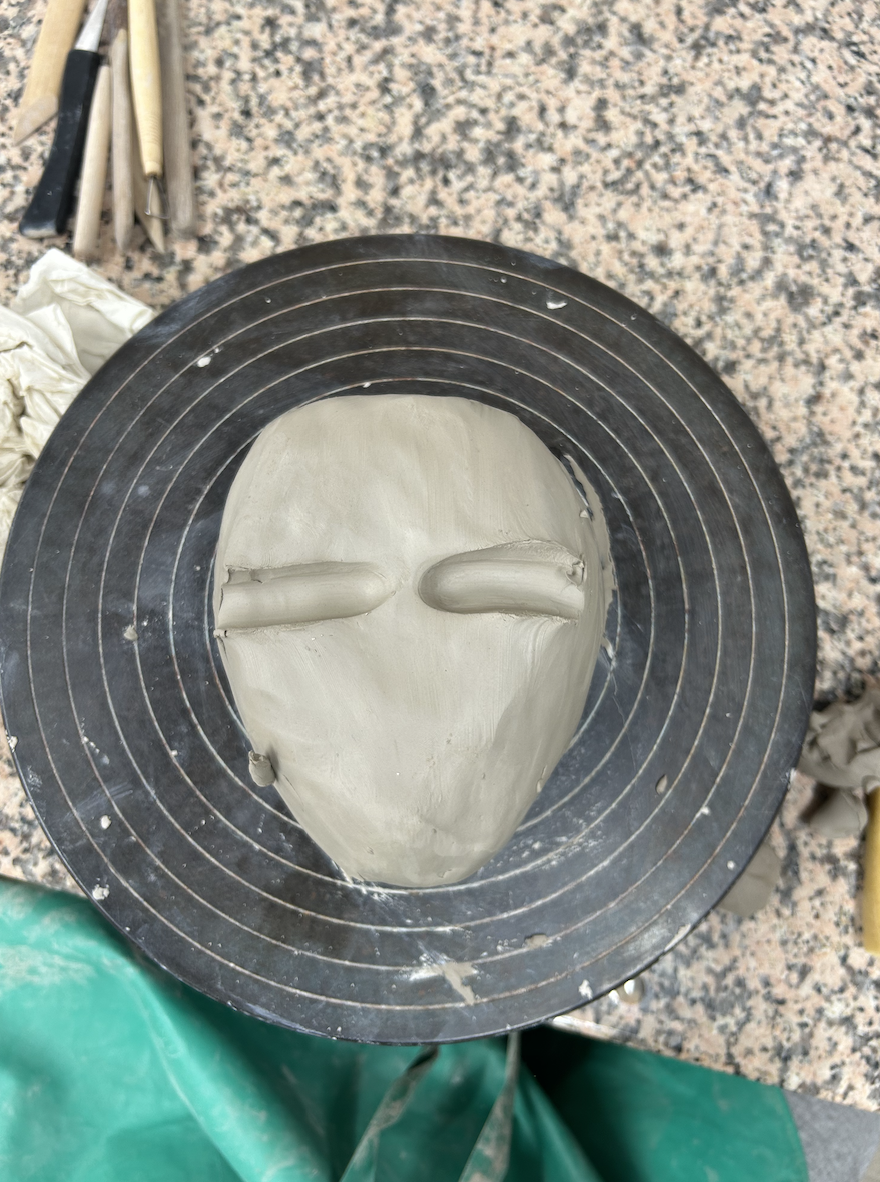
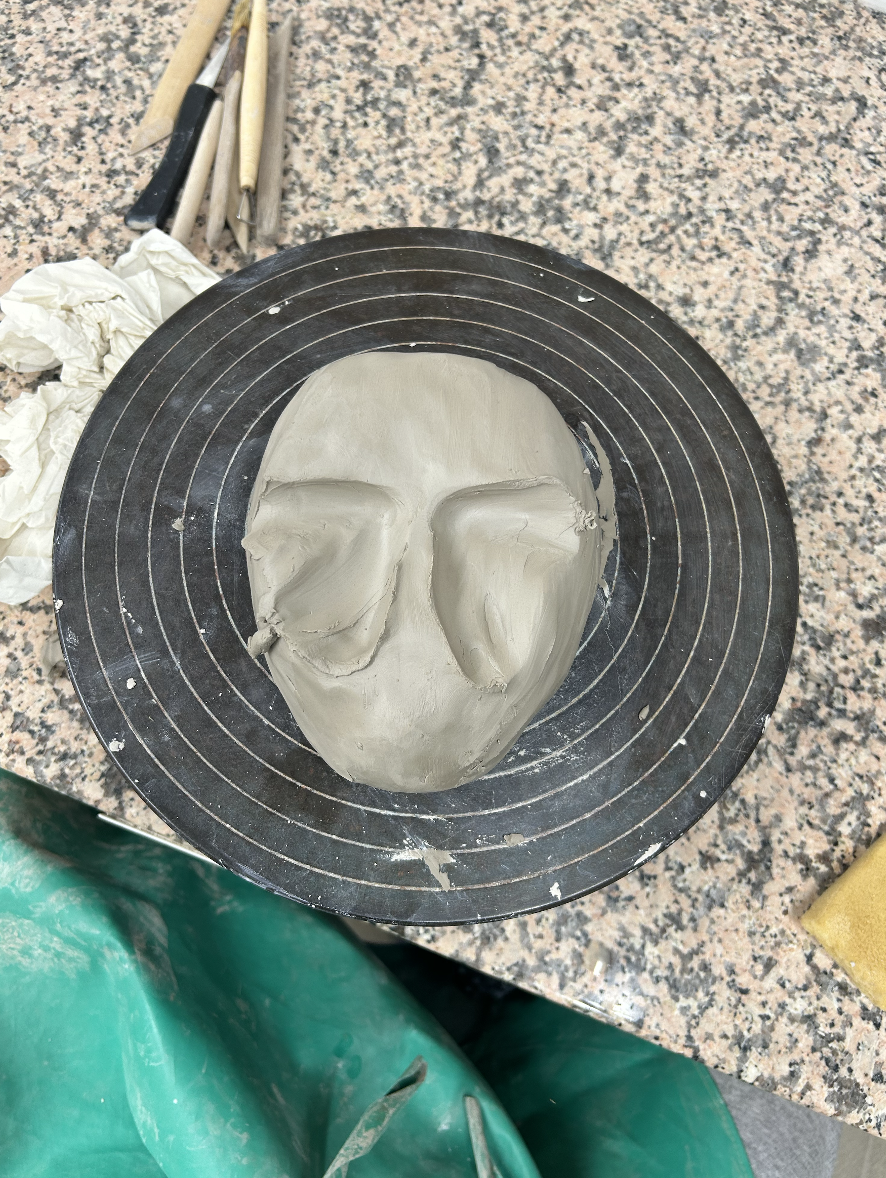


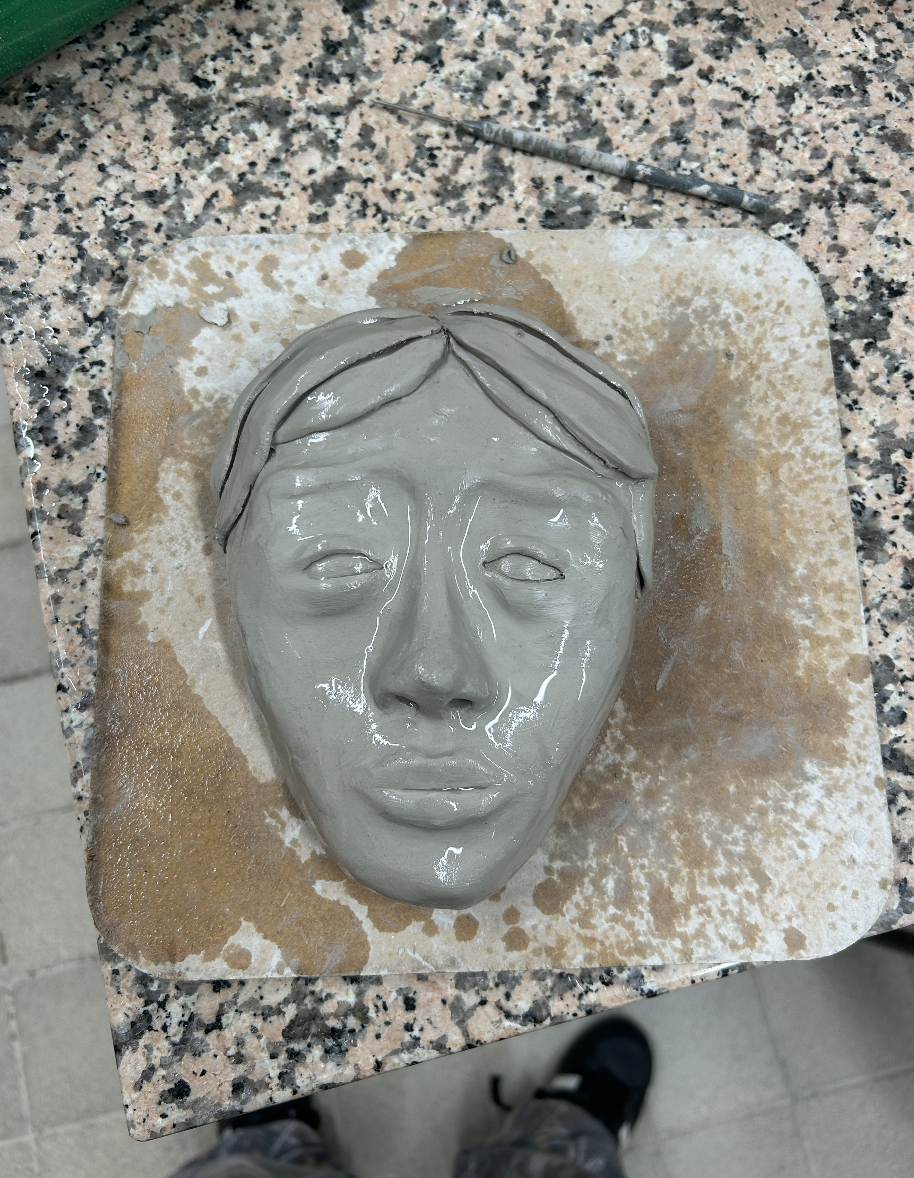
Initially, I made plans for this iteration of Set in Stone to include a ceramic mask, or a version of myself. It was exploring how emotion and identity might be expressed through the face. As it evloved it became a way to show the messiness of the brain with ADHD. I was interested in how the material could carry weight and tension, almost like a physical reflection of thought.
In the end, it didn’t feel right within the final installation, it felt too literal and I liked the idea of alluding to ideas in a more conceptual sense. However, making it helped me understand more about how clay holds presence and pressure.It felt too literal and not in line with the themes of the rest of the work. I’ve kept it as part of my development because it feels like an important step in how the work evolved.
In the end, it didn’t feel right within the final installation, it felt too literal and I liked the idea of alluding to ideas in a more conceptual sense. However, making it helped me understand more about how clay holds presence and pressure.It felt too literal and not in line with the themes of the rest of the work. I’ve kept it as part of my development because it feels like an important step in how the work evolved.

JO SPENCE
Photo therapy collaborations (1984-90)

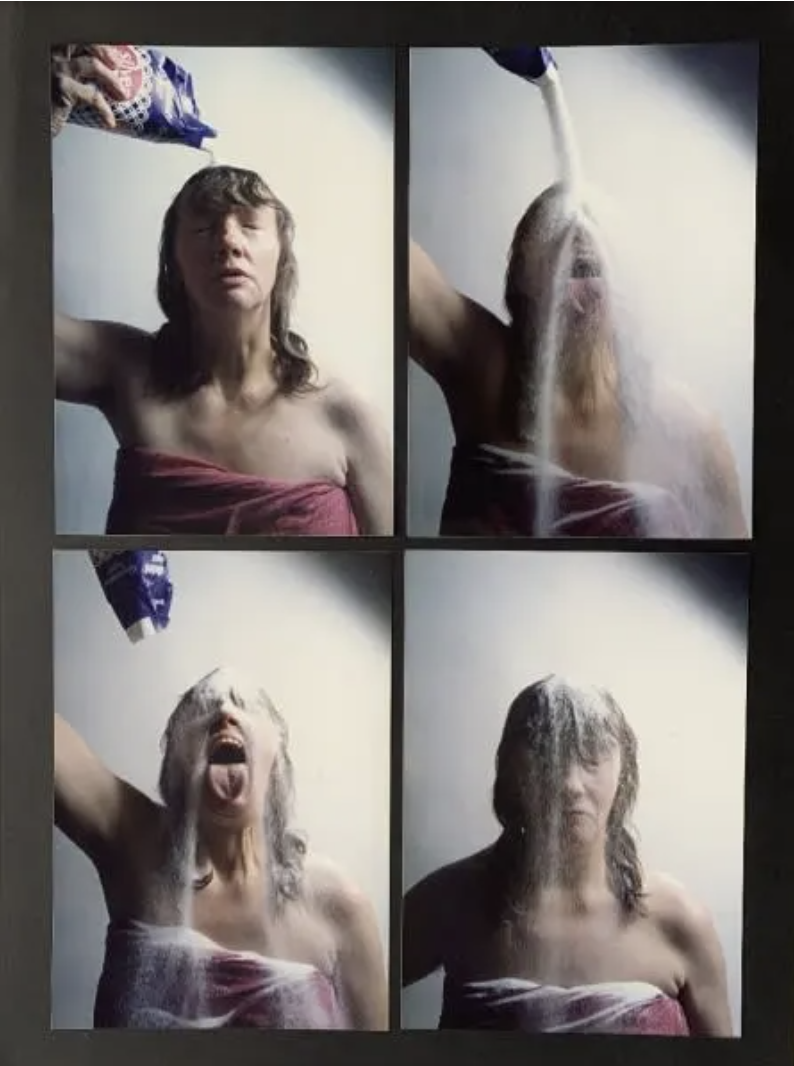
Remodelling Photo History (1982) Jo Spence
Jo Spence’s Photo Therapy work became an important reference as I was developing my own photographs. Working in collaboration with therapists and other artists, she used the camera as a tool to rethink the self, rather than to document it. Her images show identity as something unstable, shifting, and constantly negotiated. That idea resonated with me, especially at a time when I was trying to understand my own experiences of ADHD and anxiety.
Instead of taking photographs that aimed to define or stabilise something, I started choosing and making images that recognised fluidity. I looked for gestures, pauses, and the quiet in-between moments that often go unnoticed. The process became less about capturing someone, and more about representing a feeling. Sometimes unsettled, sometimes soft, sometimes unclear. Spence’s work helped me see photography as a space where uncertainty doesn’t need to be resolved, but can be held.
![]()
![]()
Photo Therapy Collaborations (1982) Jo Spence
Remodelling Photo History (1982)
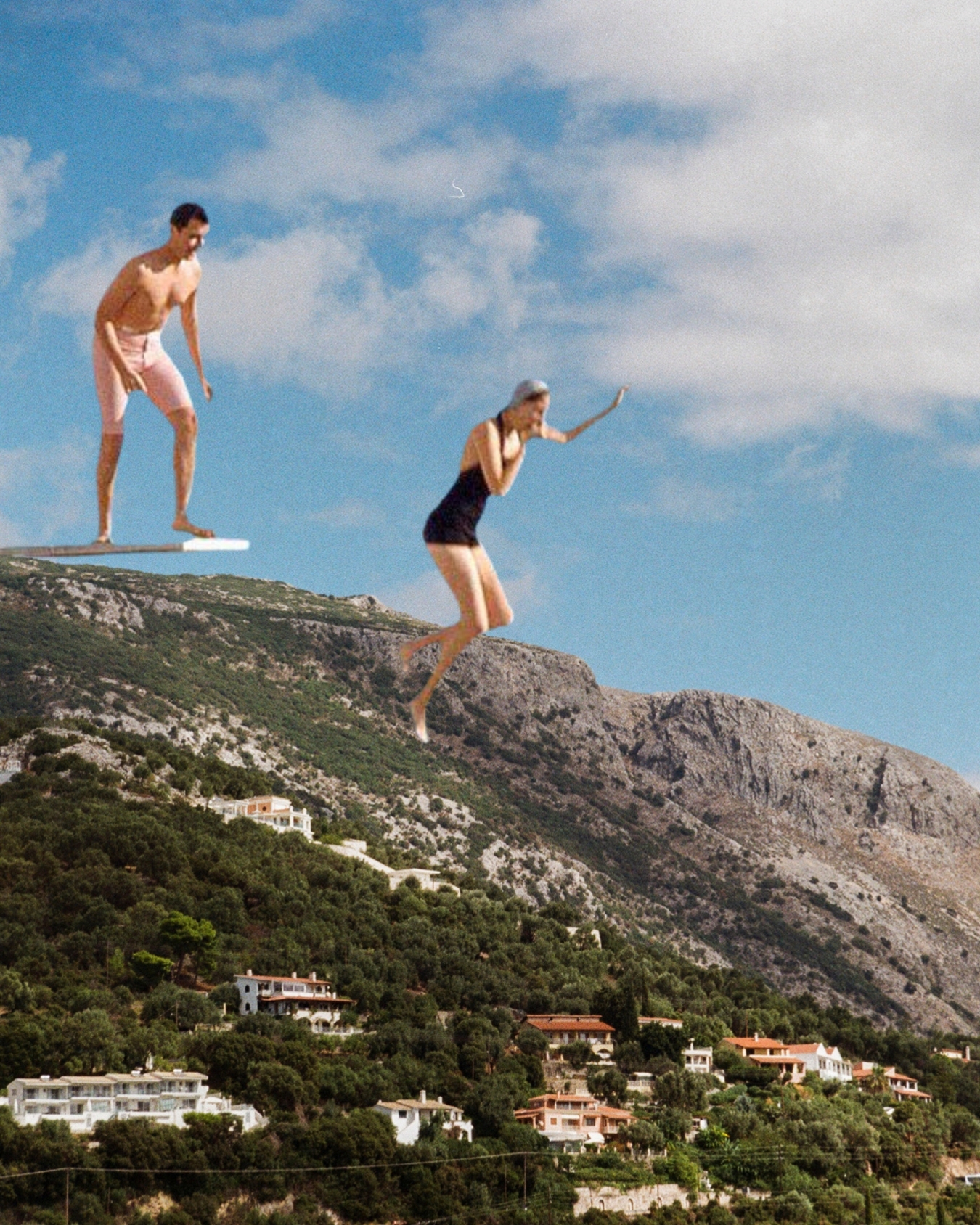
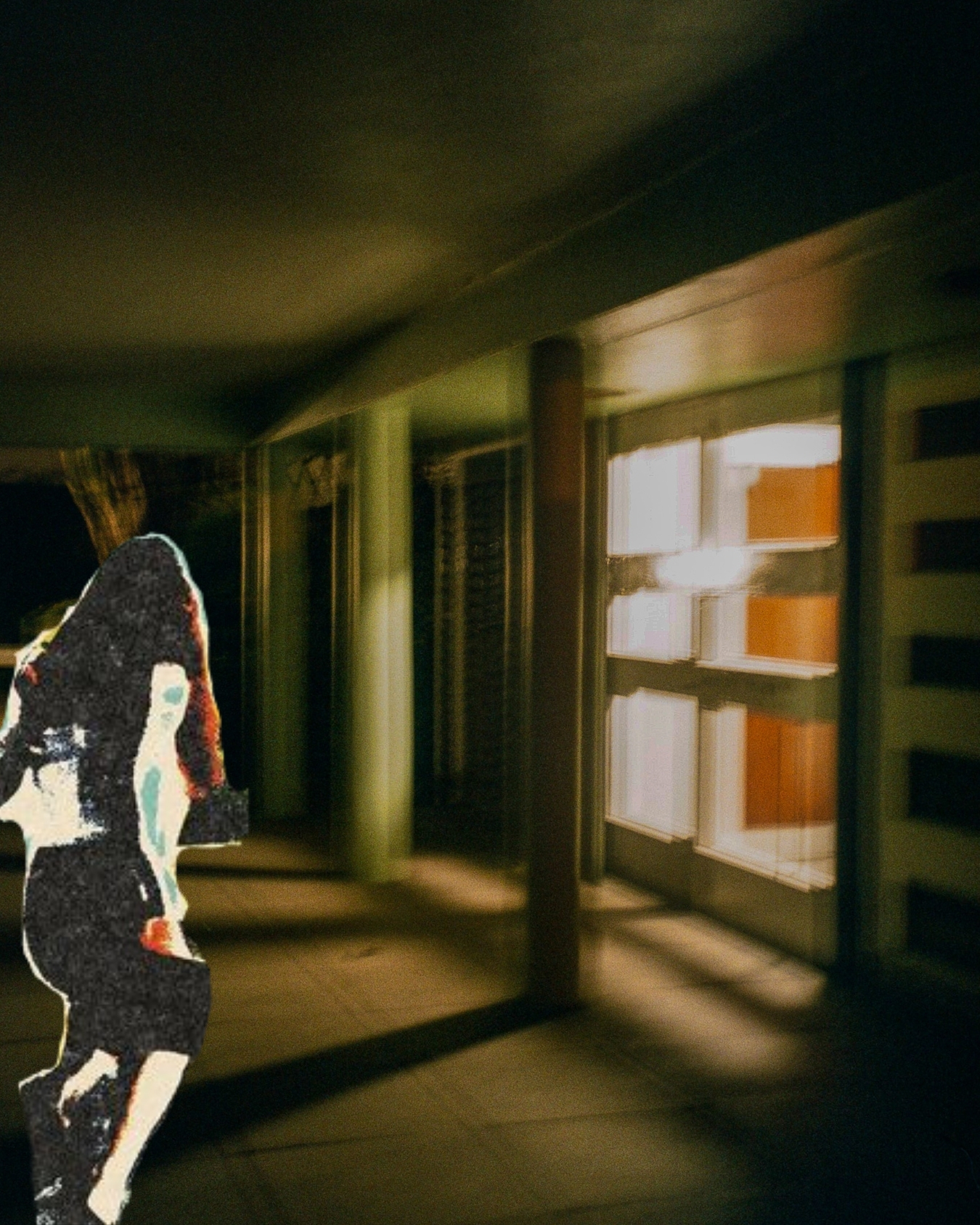
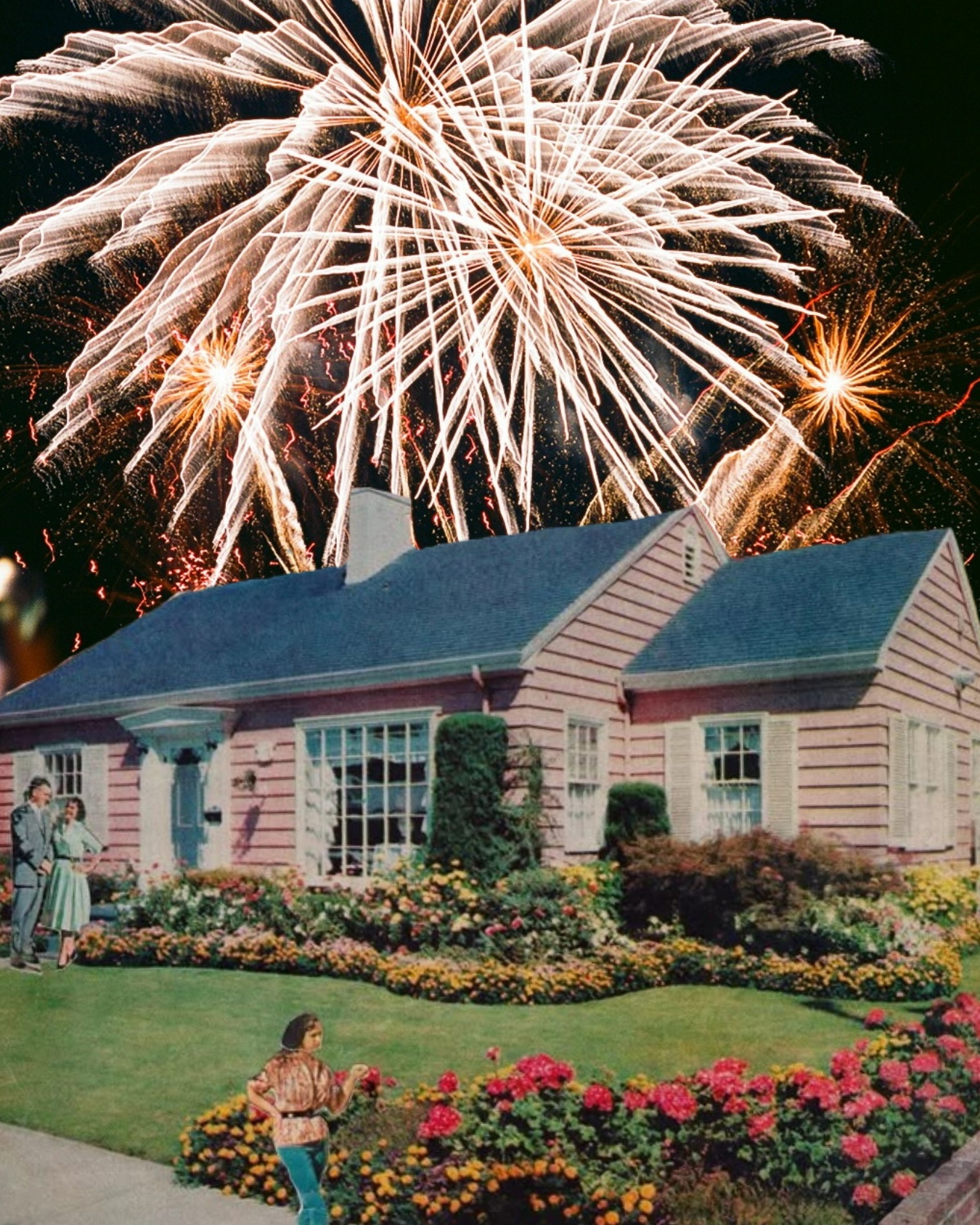
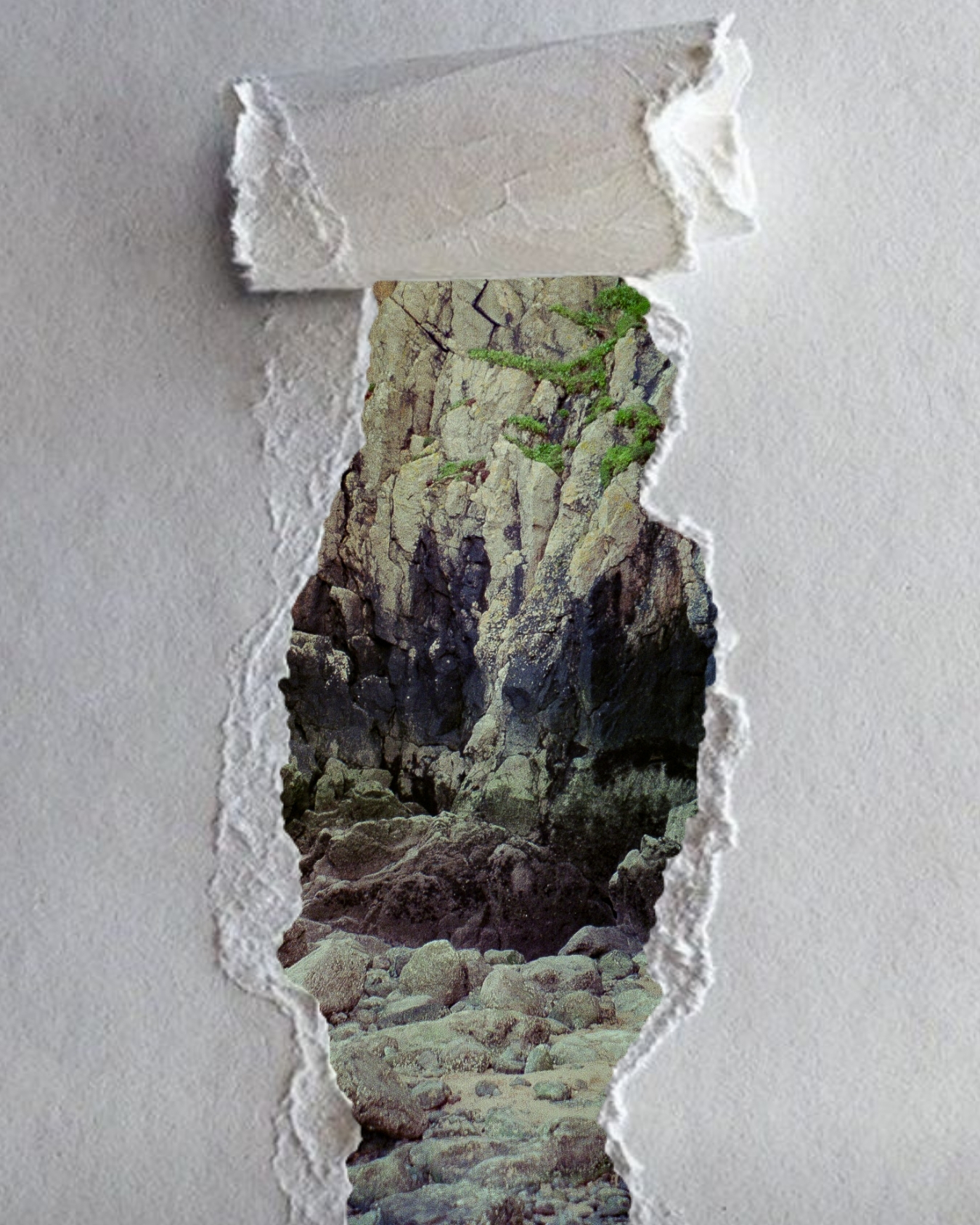
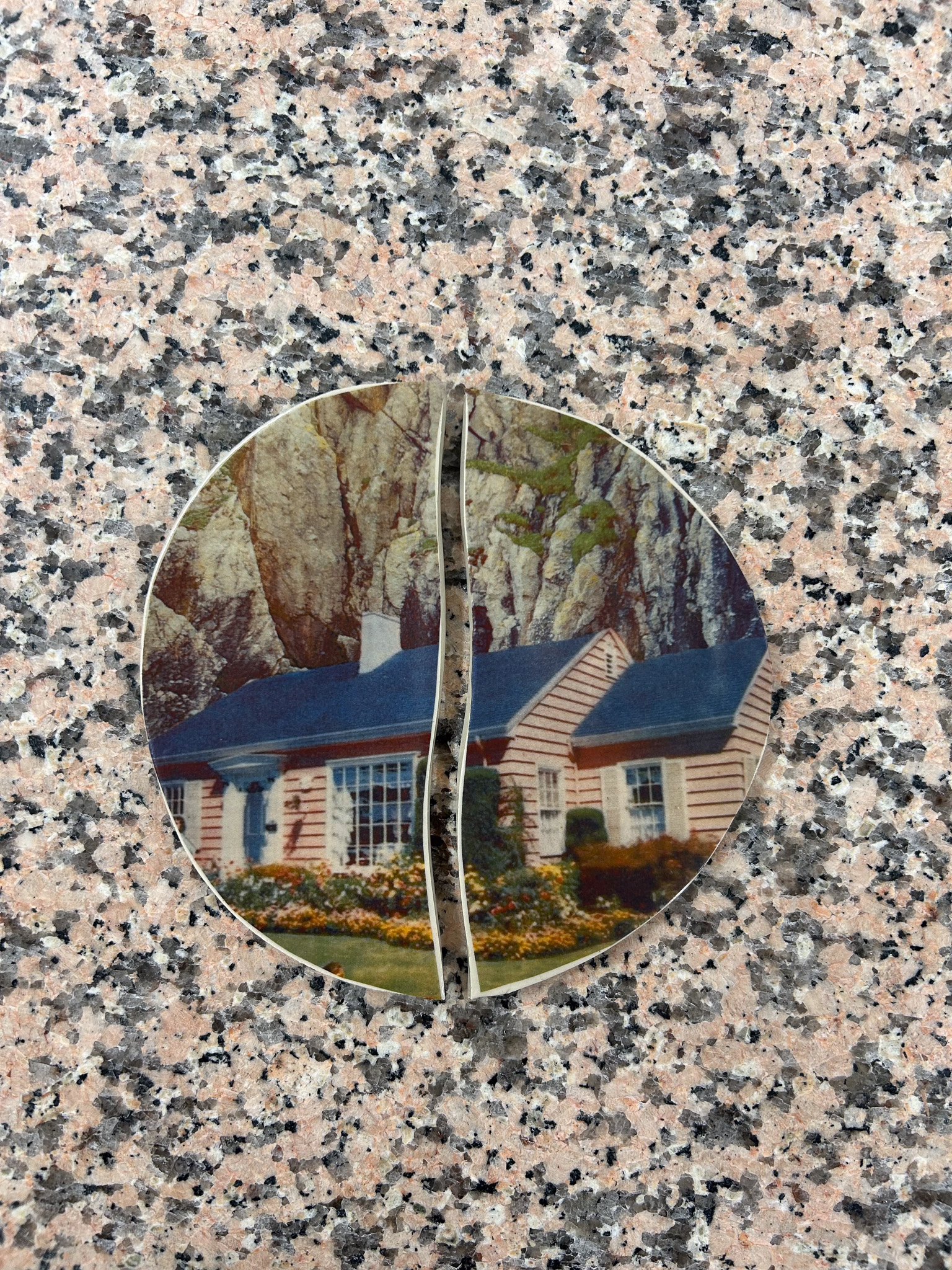
Her use of collage and annoation helped me think differently about how photographs can hold emotion. She treated images as something that could be pulled apart, questioned and reshaped, rather than as finished, fixed records. That approach influenced how I use my own 35mm photographs. Instead of keeping the image whole, I cut, layer and rearrange it across clay surfaces so that meaning can shift.
Instead of taking photographs that aimed to define or stabilise something, I started choosing and making images that recognised fluidity. I looked for gestures, pauses, and the quiet in-between moments that often go unnoticed. The process became less about capturing someone, and more about representing a feeling. Sometimes unsettled, sometimes soft, sometimes unclear. Spence’s work helped me see photography as a space where uncertainty doesn’t need to be resolved, but can be held.


Photo Therapy Collaborations (1982) Jo Spence
Remodelling Photo History (1982)
Her use of collage and annoation helped me think differently about how photographs can hold emotion. She treated images as something that could be pulled apart, questioned and reshaped, rather than as finished, fixed records. That approach influenced how I use my own 35mm photographs. Instead of keeping the image whole, I cut, layer and rearrange it across clay surfaces so that meaning can shift.
THE PROCESS
35 MM PHOTOGRAPHY
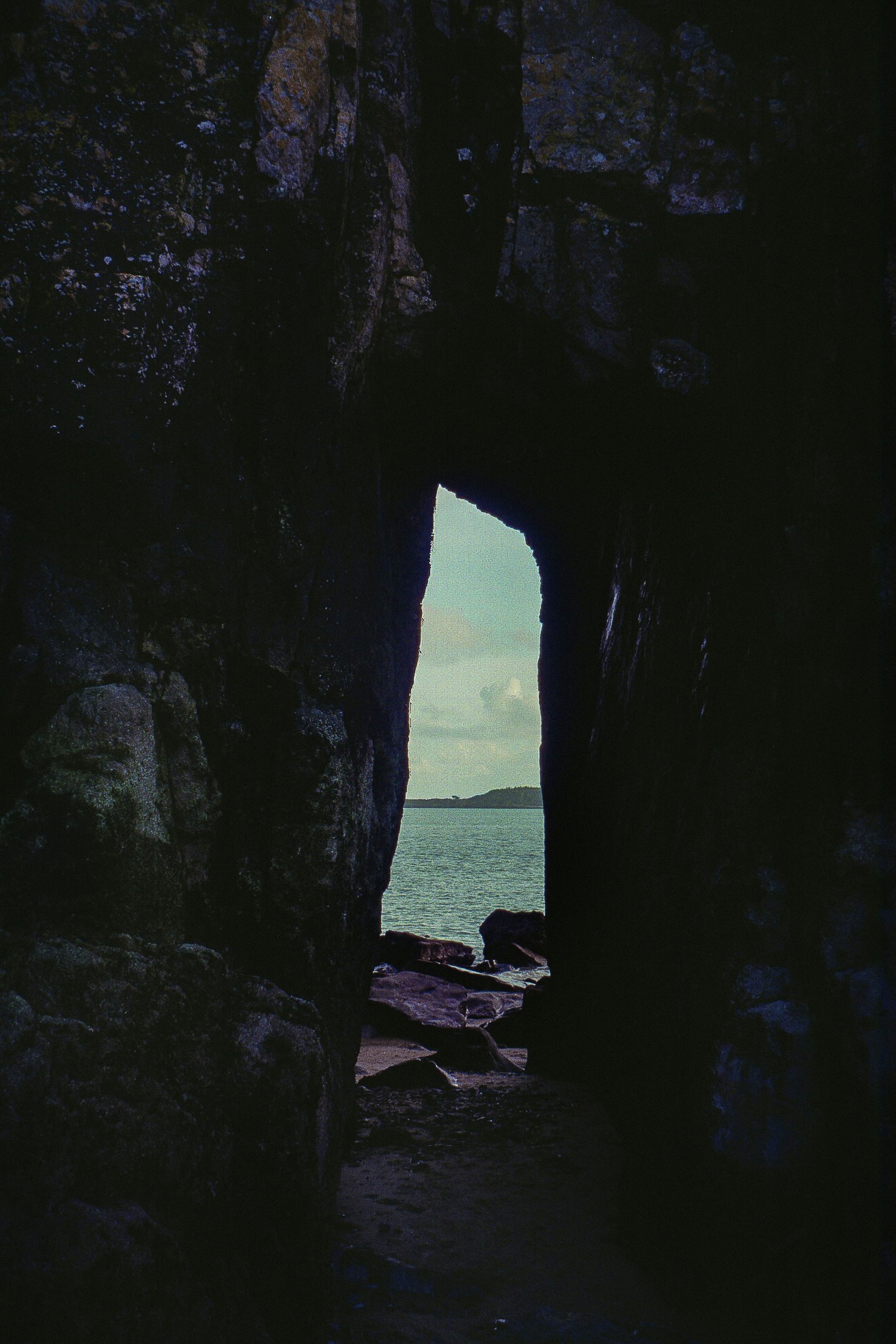
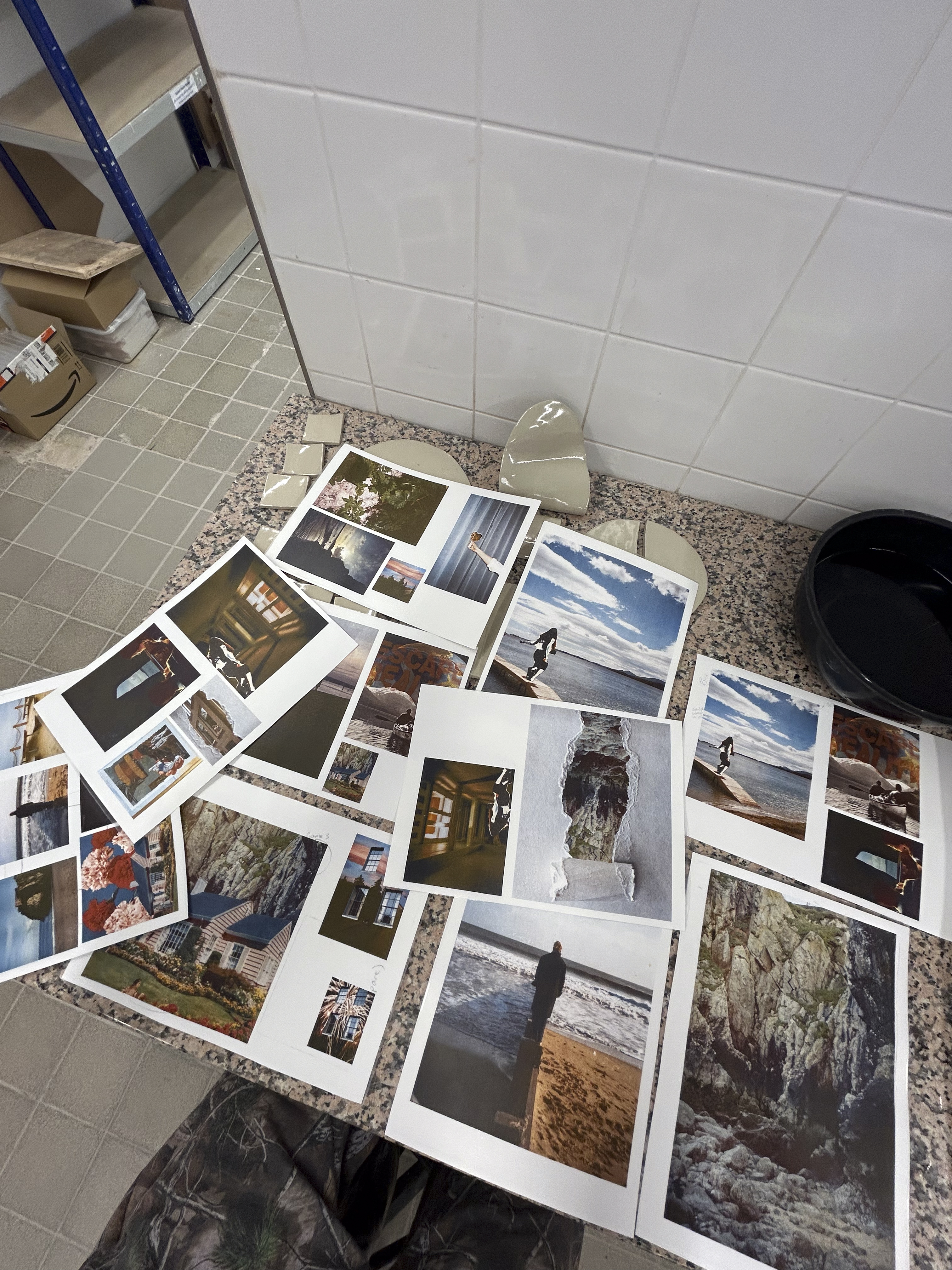
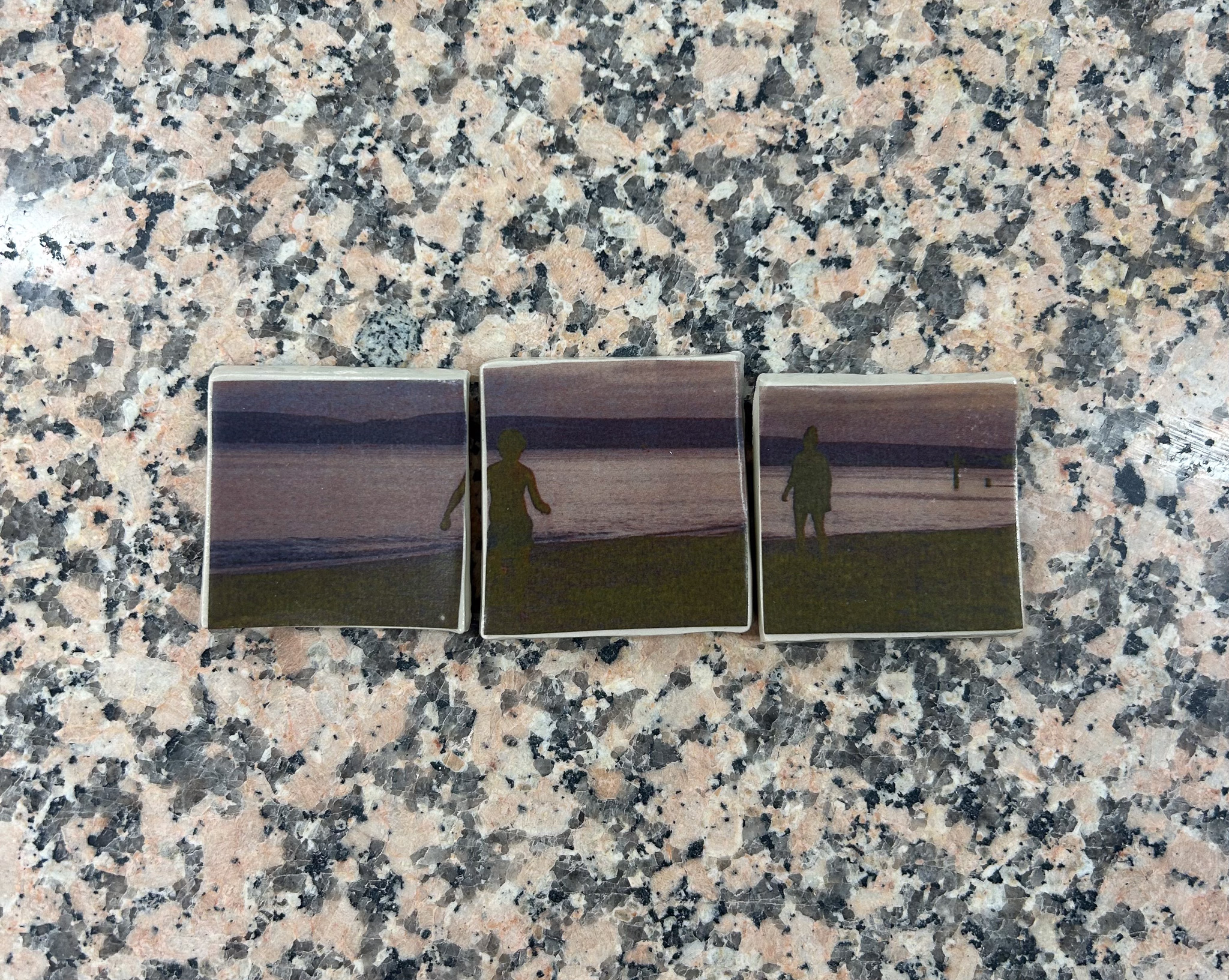
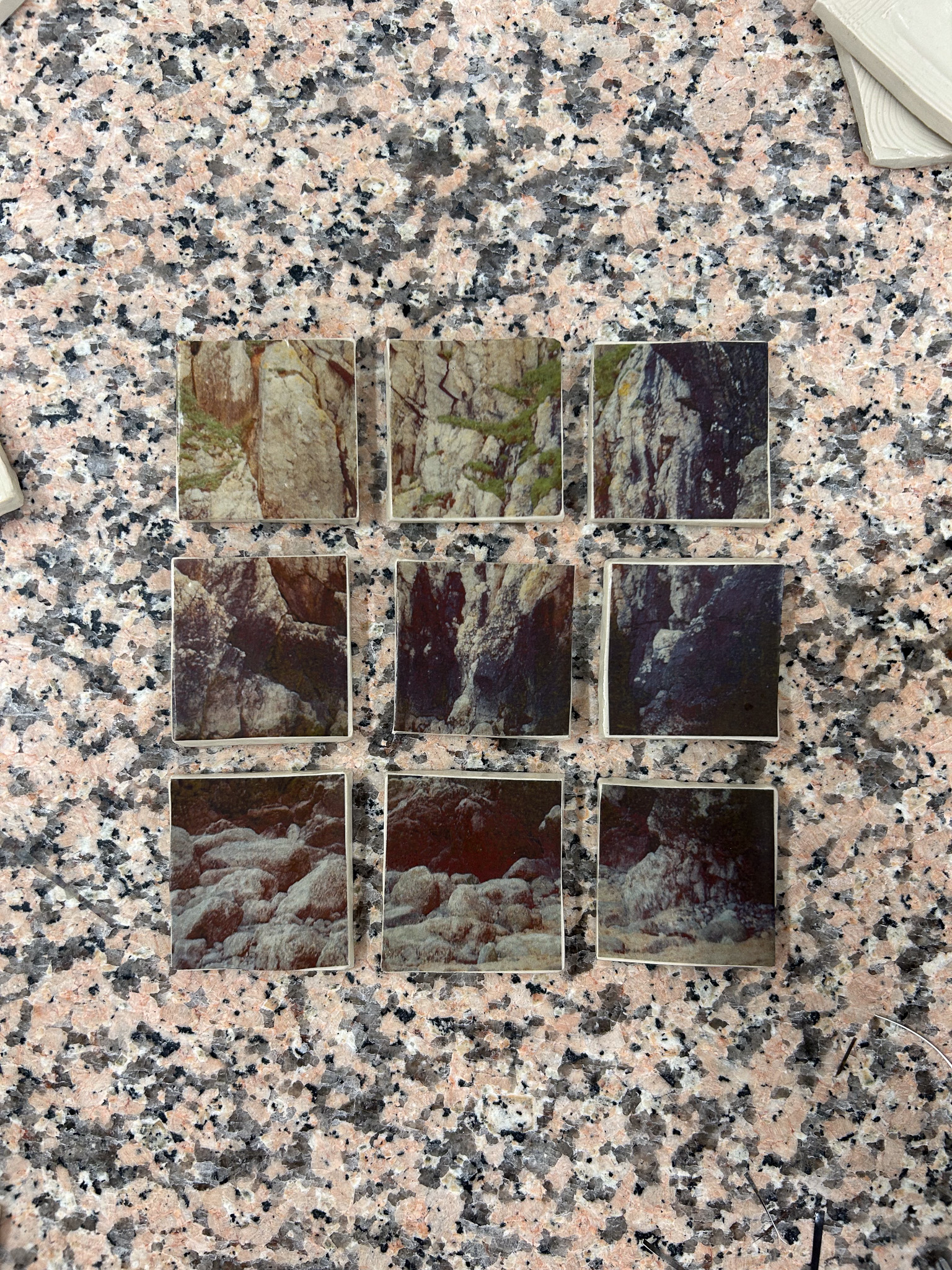
Looking at Jo Spence’s Photo Therapy made me think about how images can hold emotional states without needing to show the body directly. I began returning to my own archive of 35mm film and paying attention to the photographs that felt quietly charged.I noticed I was drawn to landscapes that felt in-between. Places where something is shifting, but it is not clear what. Cliffs, shorelines, walkways at dusk. Moments where light changes or where the space feels slightly uncertain. They seemed to hold the same sense of pause and internal movement that I had been exploring through clay.
Choosing the photographs became an instinctive process. It was not about selecting the most visually striking images, but the ones that felt like a thought forming, or a feeling just beneath the surface. The sense that you could be arriving or leaving. That something has happened or is about to.
These were the images that made sense to bring into the ceramic work. They already carried a quiet tension, a softness, and a feeling of being suspended between states. In that way, they became another way of tracing emotion through material.




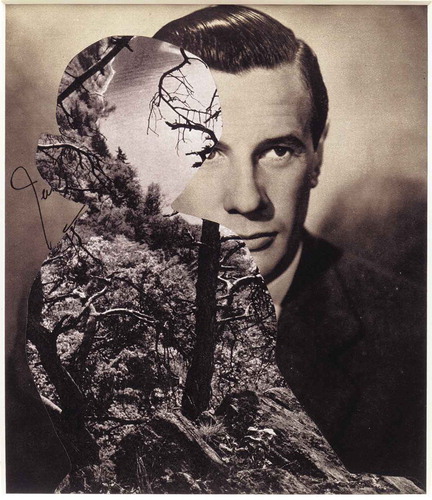
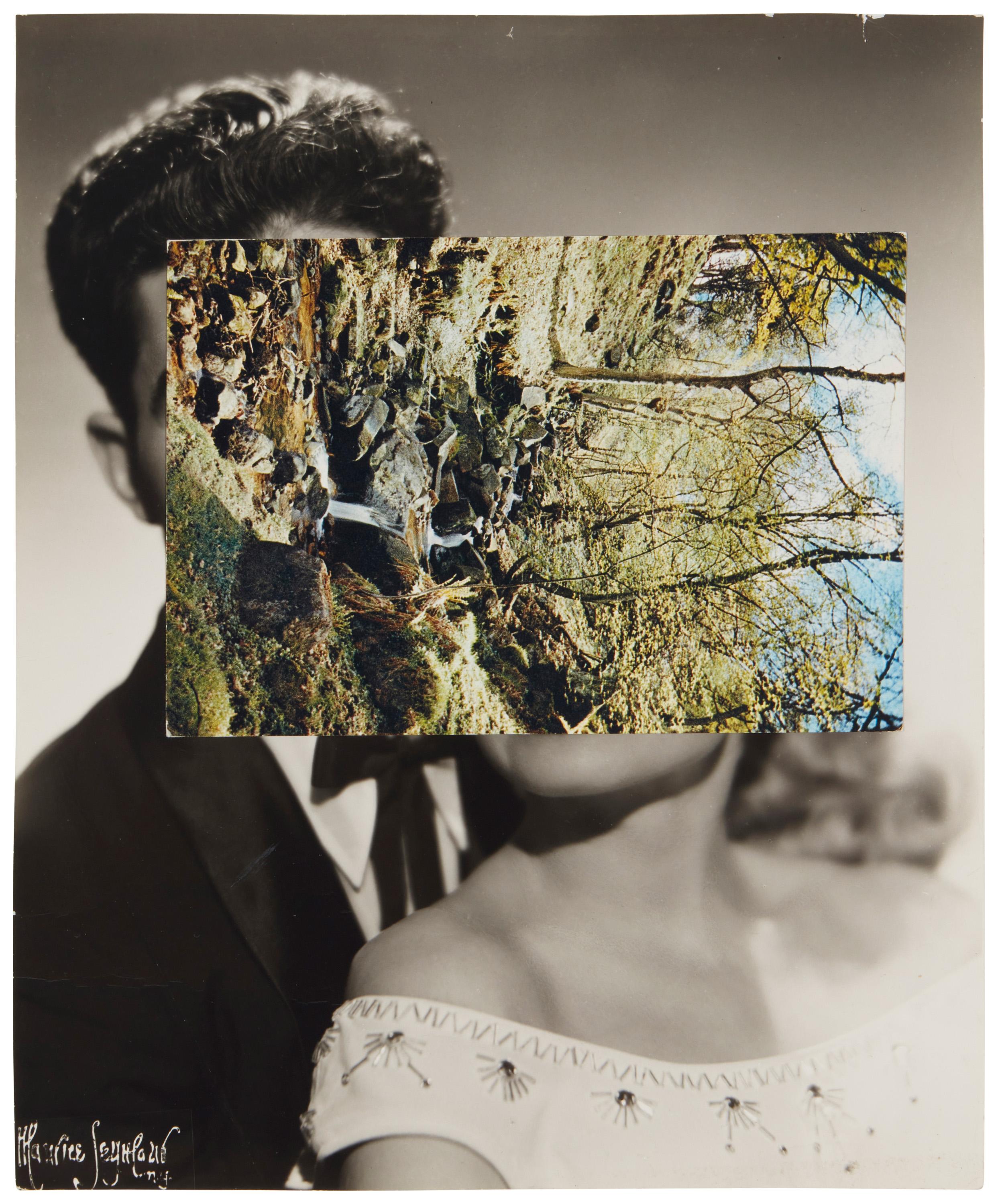
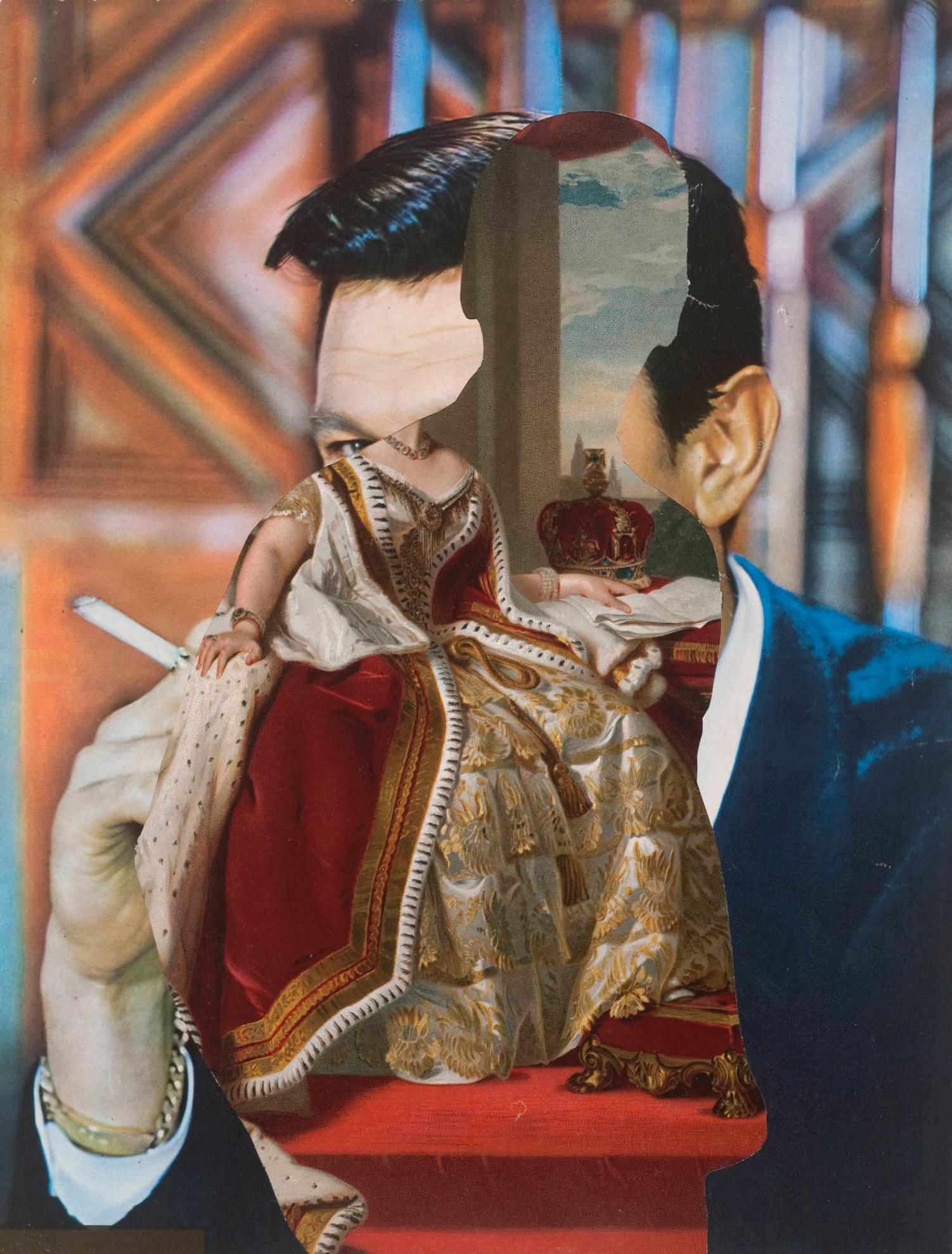
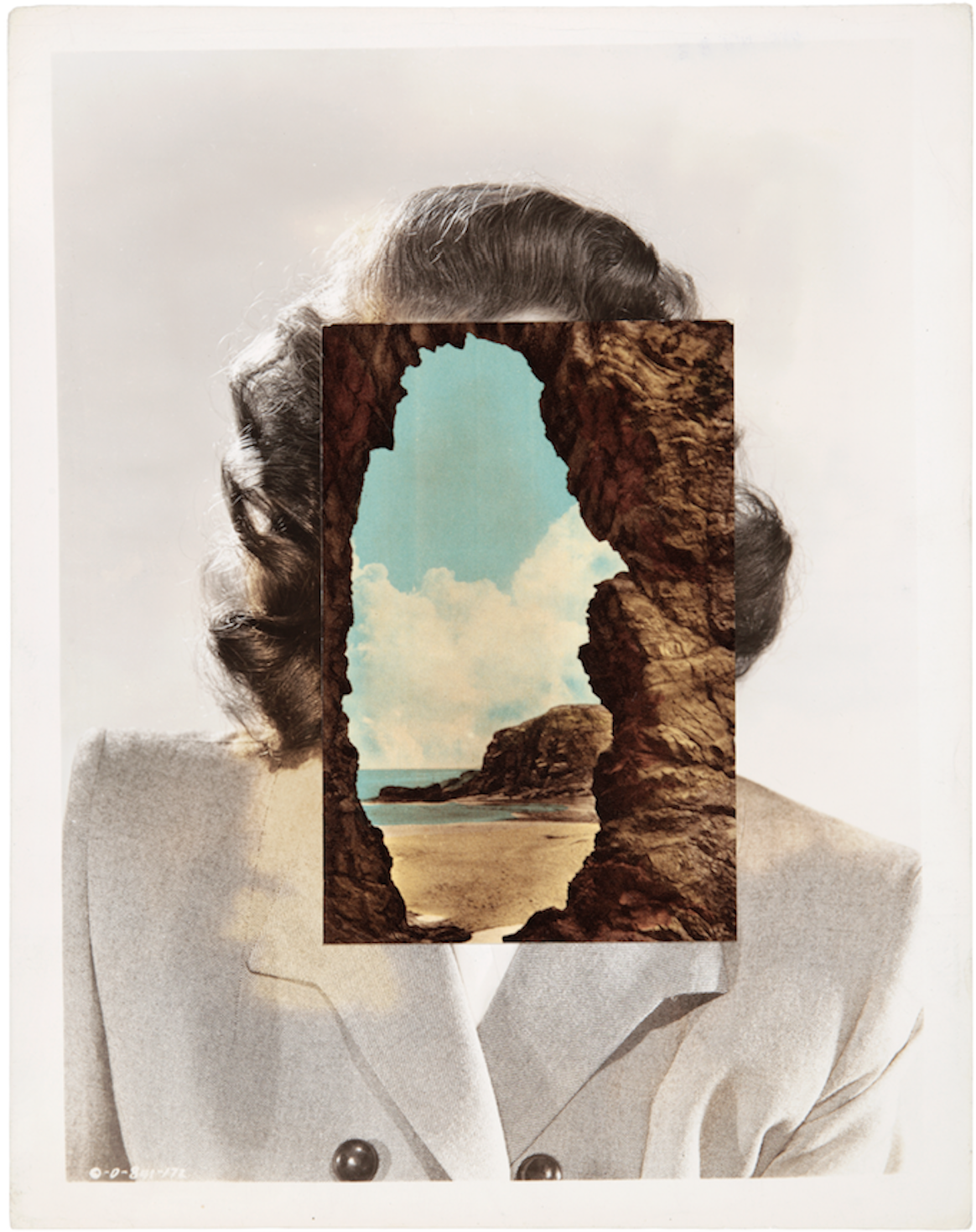
John Stezaker
The work of Stezaker showed me how collage can function as a structure for thought as well as a tactile process. His minimal interventions create quiet but unsettling shifts in identity, where familiar images are made strange through precise cuts and re-combinations.
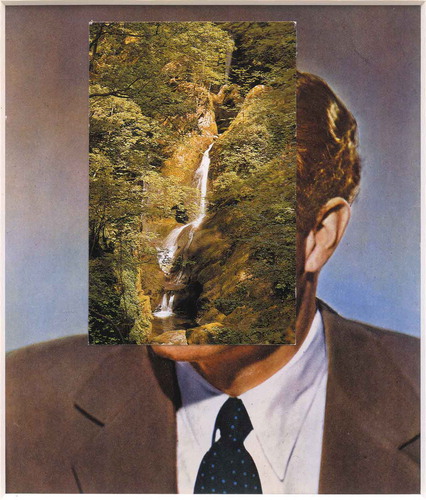
Multiple images from Mask Series
John Stezaker (2006)
Photographic collages
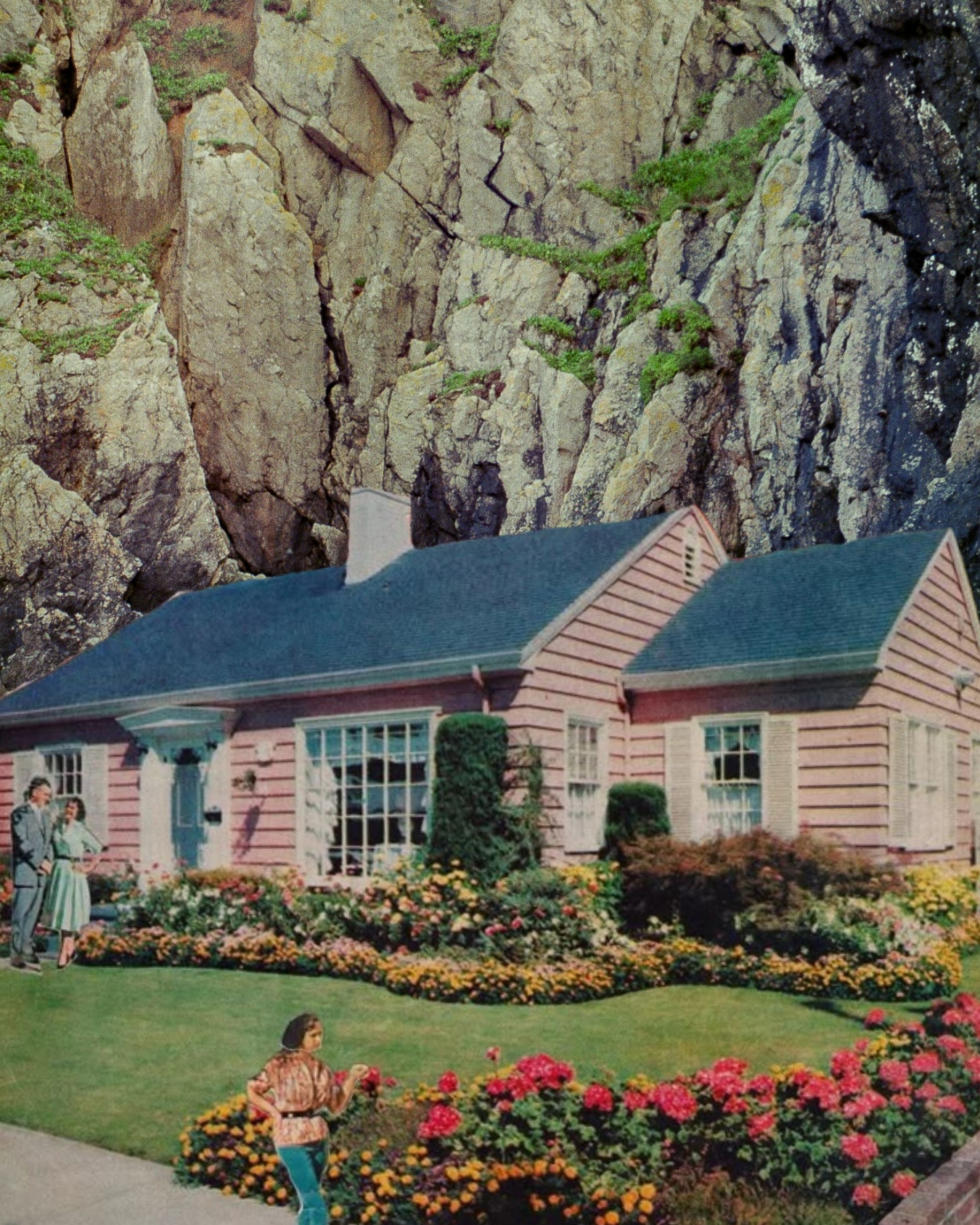
Set in Stone Collage Series (2025) Edie Holland
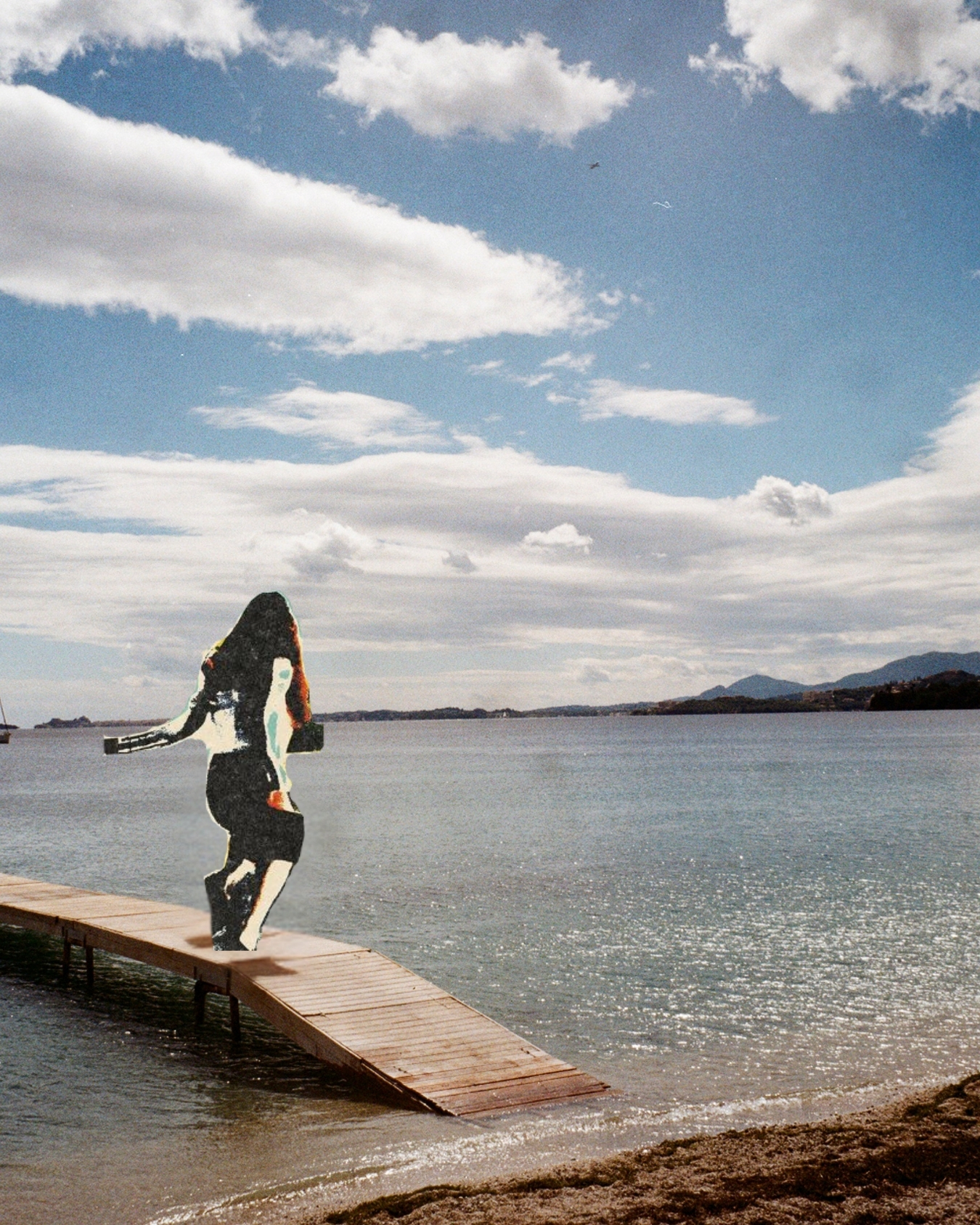
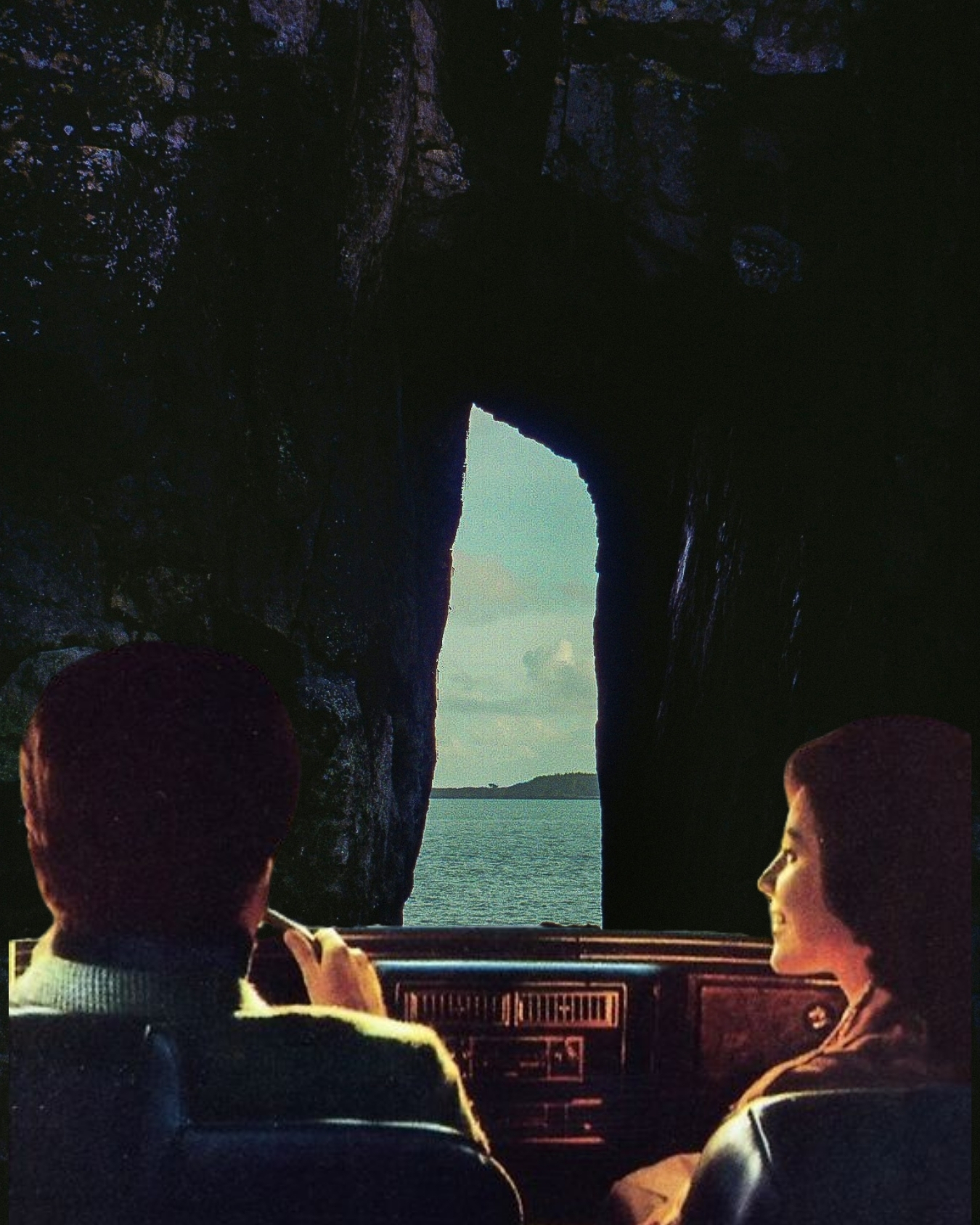
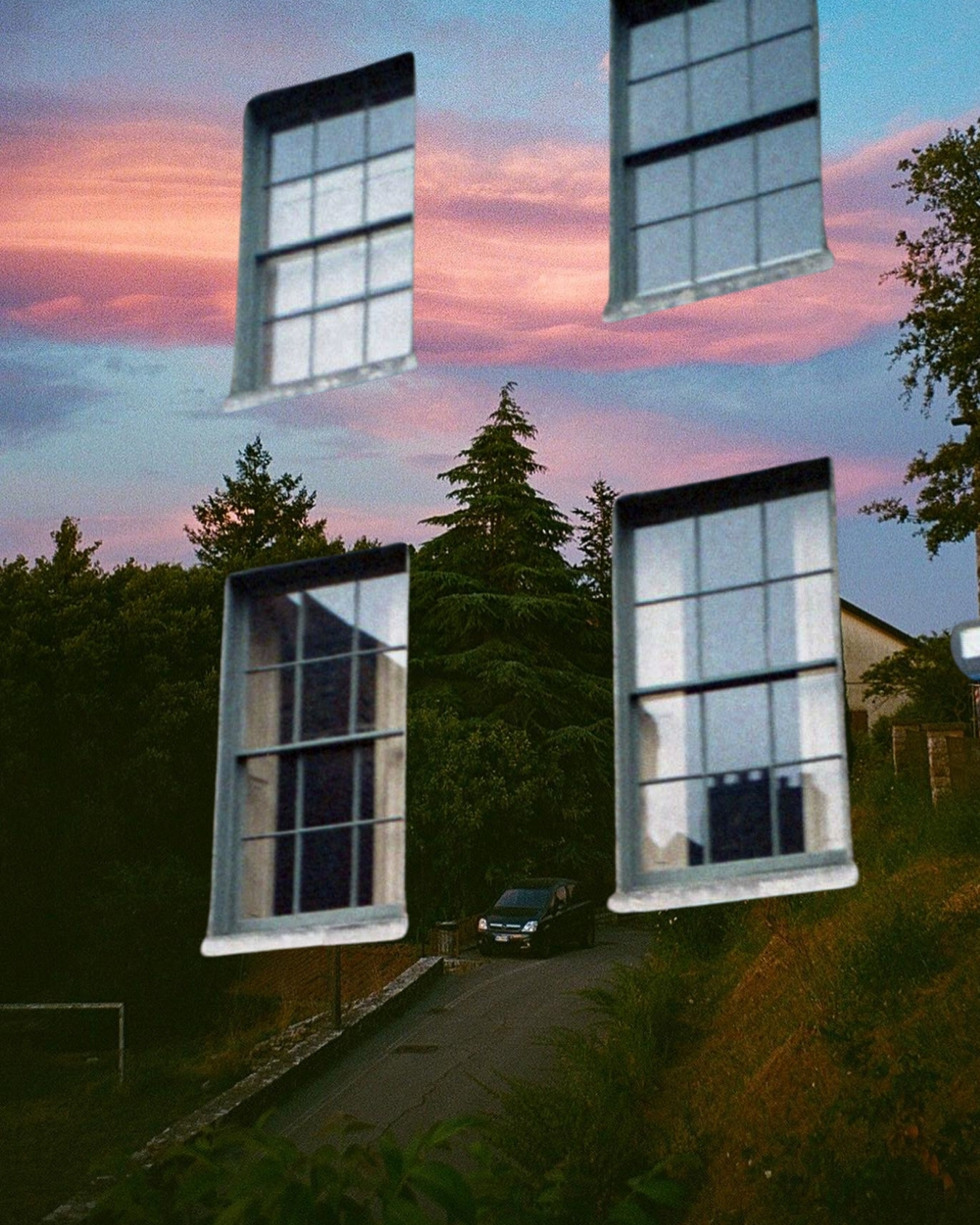
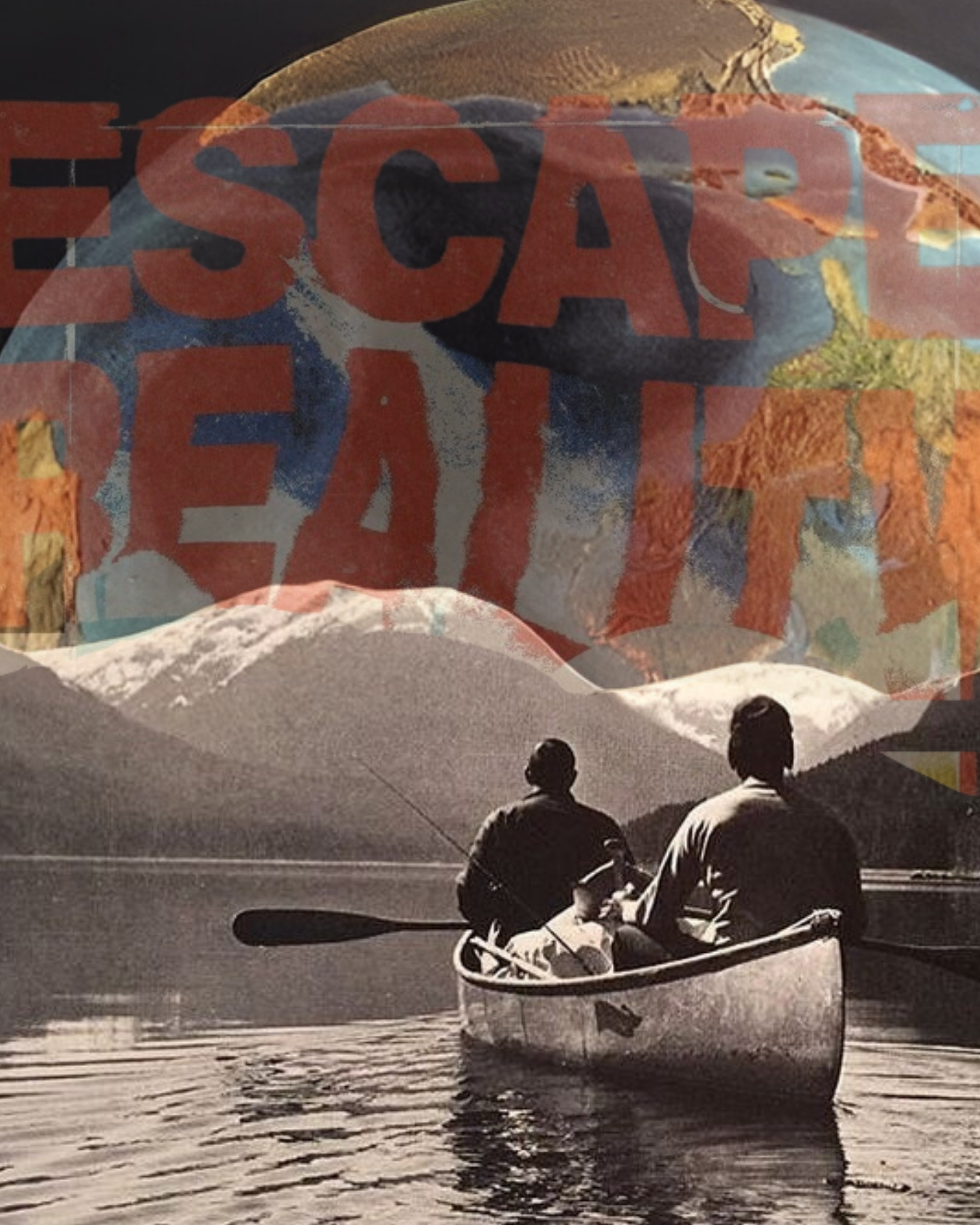
FORMING THE SHAPES
FORMING THE SHAPES
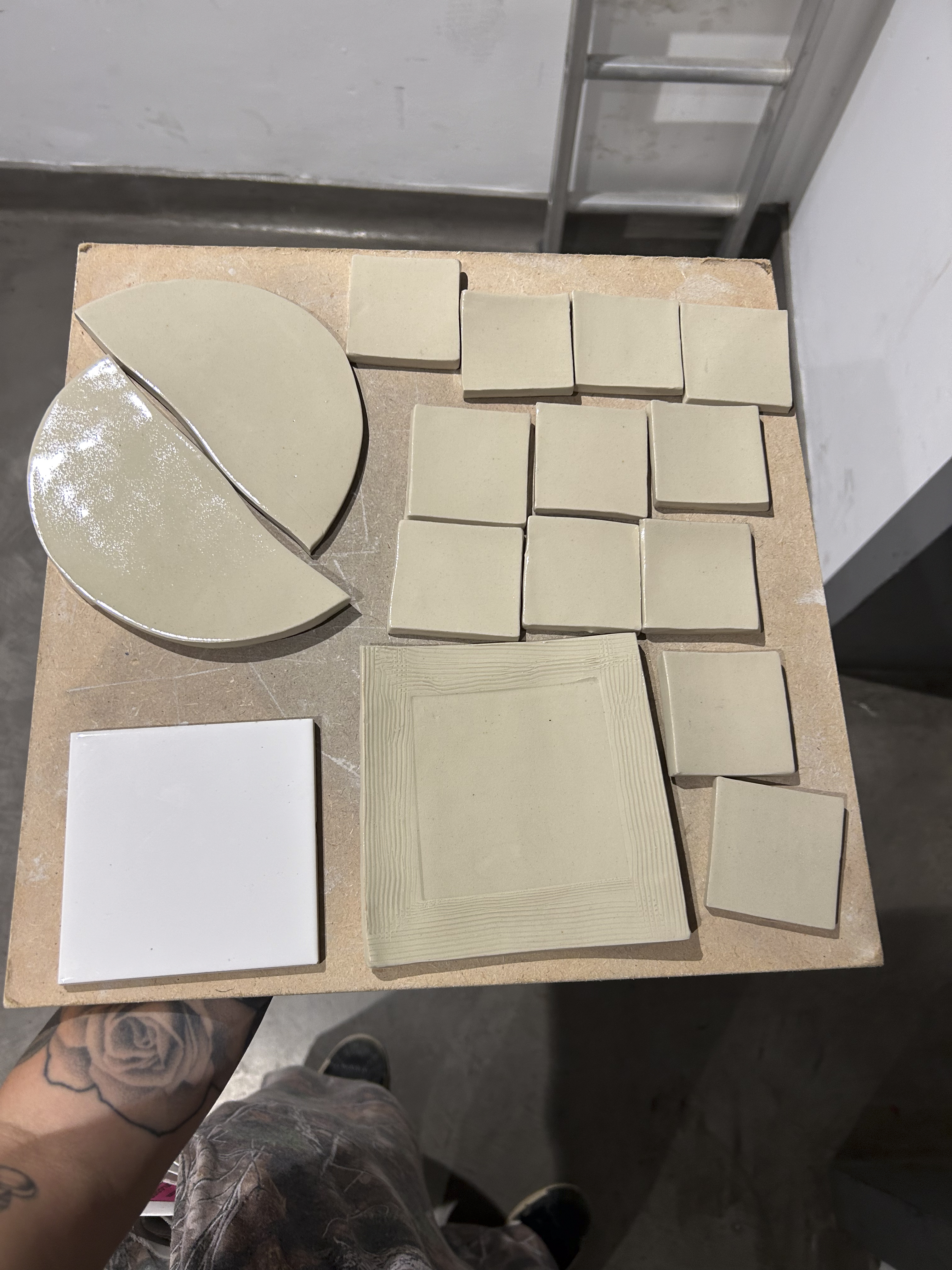
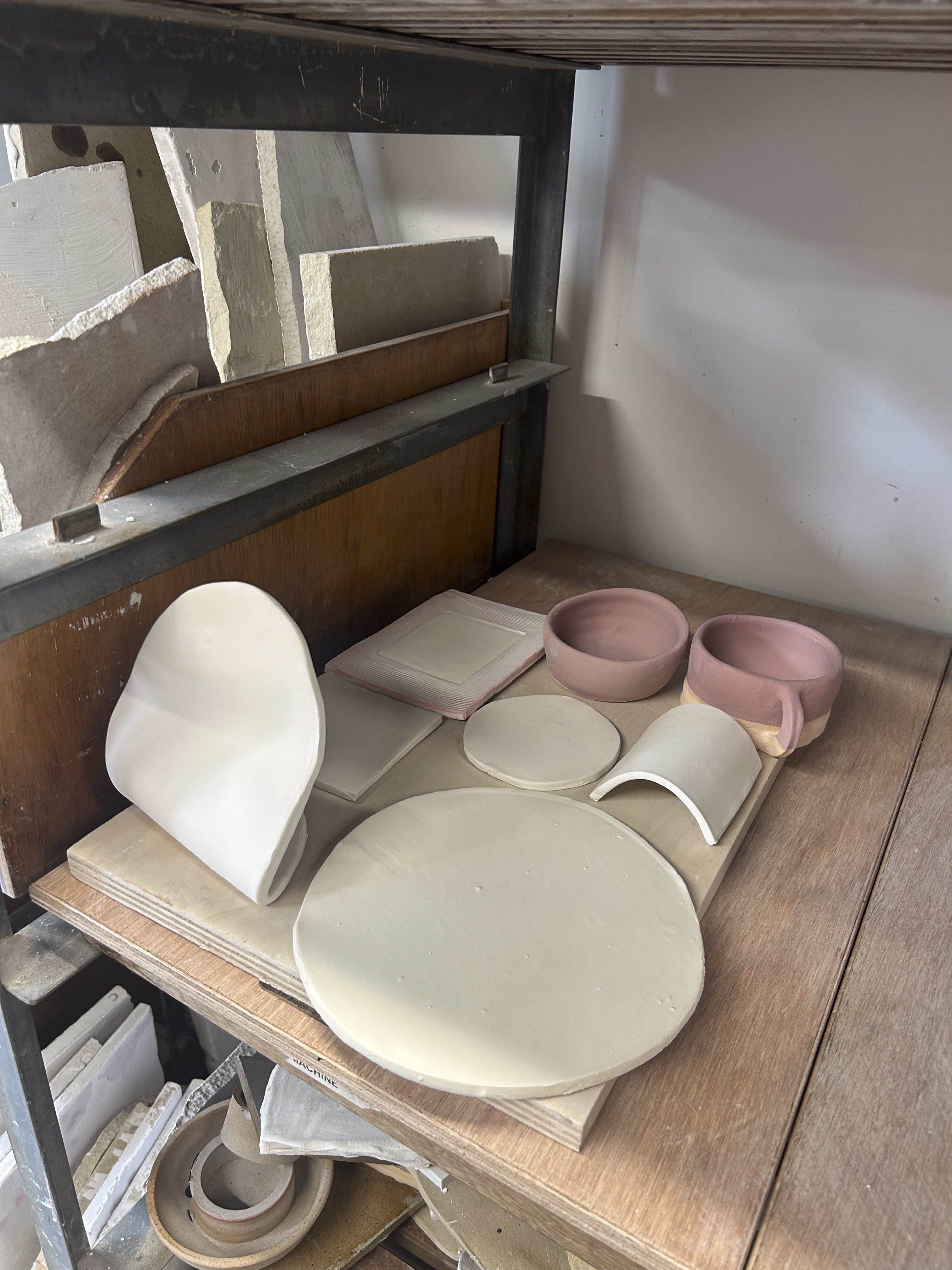
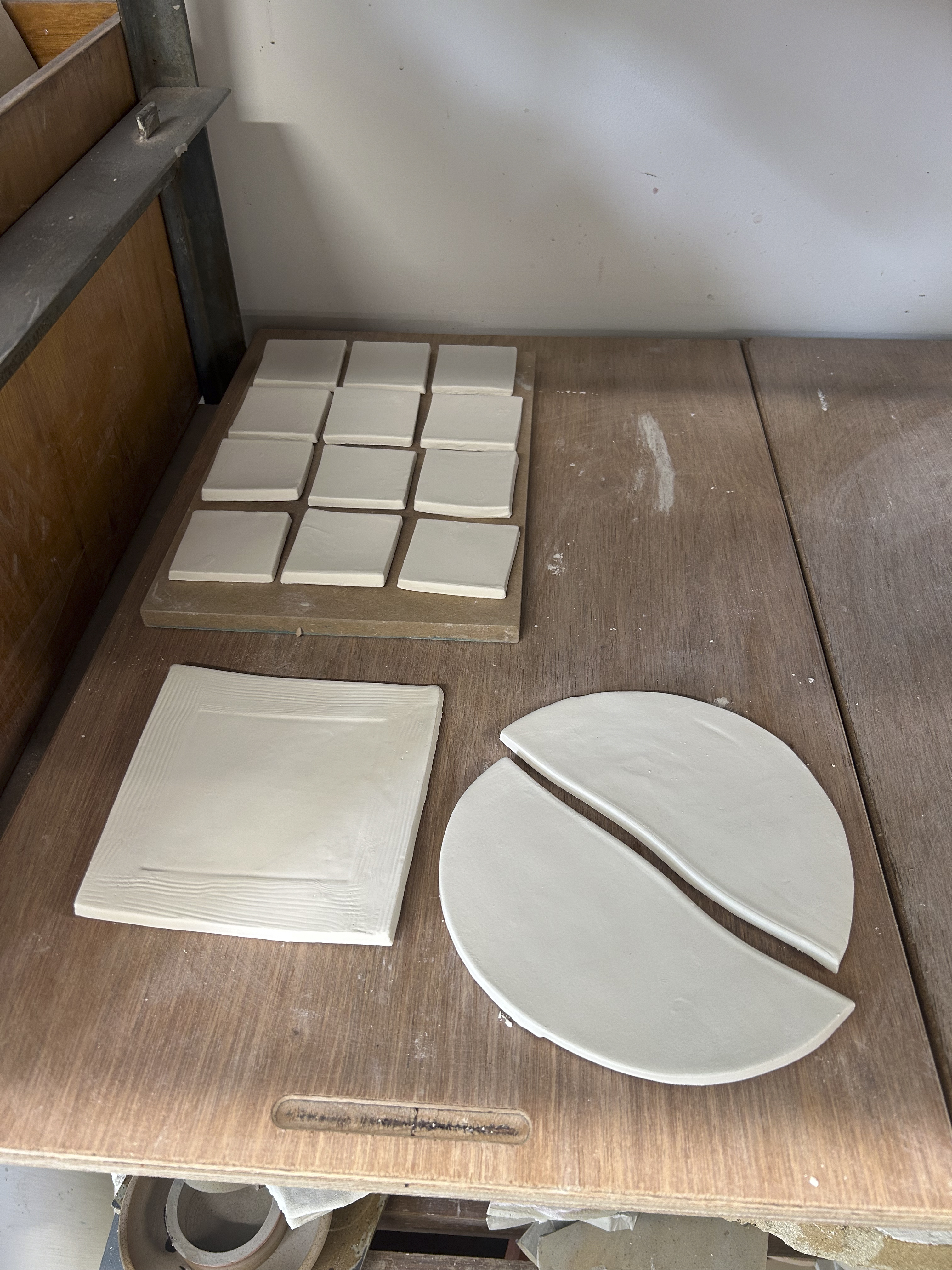
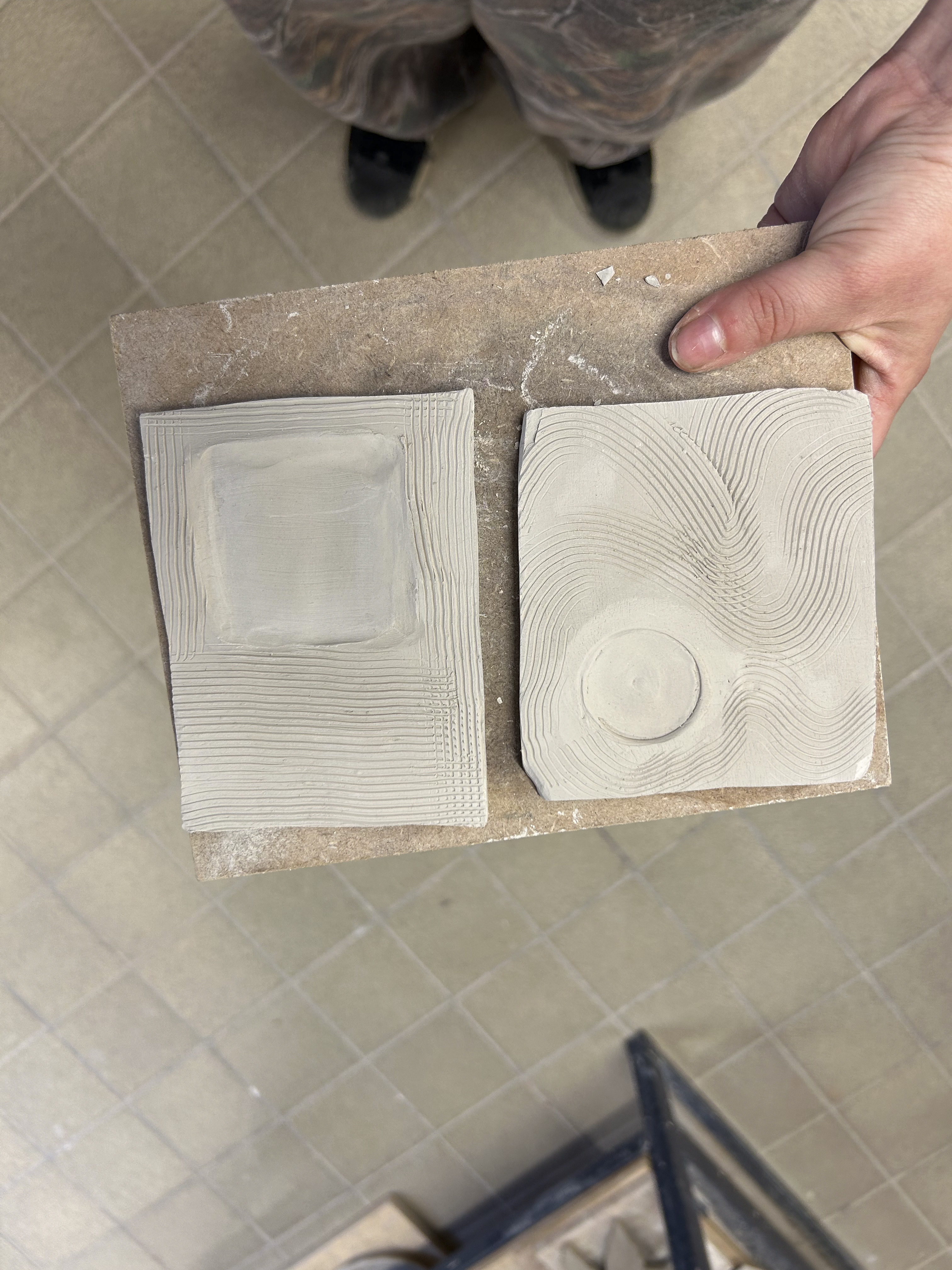
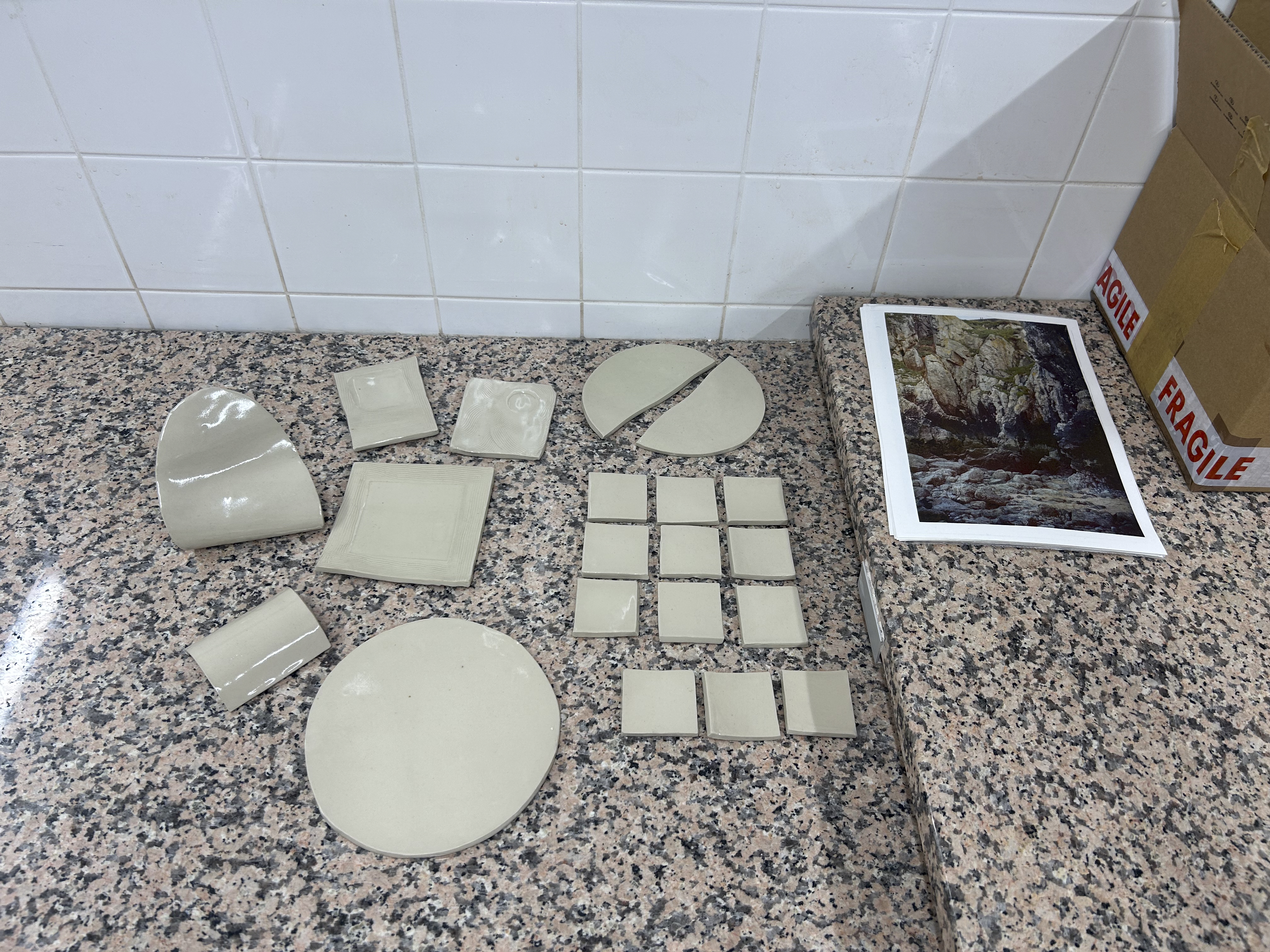
Creating the pieces, I wanted to move beyond neat, uniform square tiles and explore more unique, irregular forms in clay. I allowed the process to guide me, experimenting intuitively rather than planning everything in advance. In some pieces I focused on creating built-in borders for my photographic decals, using a serrated-edged metal rib to glide across the soft clay. This left abstract imprints that acted like frame. I also experimented with curved shapes and arches, considering how the pieces would occupy space and stand up in a gallery setting. These forms reflect my interest in organic, imperfect structures, mirroring the fractured and layered themes within the work itself, and encouraging viewers to engage with each piece as an individual object rather than a uniform tile.


RACHEL KNEEBONE

Rachel Kneebone
399 Days, 2012-2013. Porcelain wall relief (installation)
Victoria and Albert Museum collection
Rachel Kneebone writes about working with what she calls the “clay body”, allowing it to shift, stretch and move in unpredictable ways. On the White Cube site, her work is described as exploring renewal, life cycles and the physical body, using porcelain to express states of transformation and emotional tension. She has said that her practice is about “inhabiting the body, what it is to be alive in the world” (White Cube, 2022).
I connected with this idea of the material itself holding emotion. In her sculptures, the forms feel as though they are on the edge of collapse or reshaping themselves into something new. There is a sense of vulnerability, but also resilience. That really influenced how I approached my own ceramic pieces. Rather than trying to control the clay into a perfect form, I began allowing it to bend, crack or shift, trusting the process instead of forcing it. Working this way helped me see imperfection as something expressive rather than something to fix.
399 Days (2012–2013) is a large porcelain installation of hers, where bodies and folded forms seem to merge, collapse and re-emerge. The work carries a sense of tension and vulnerability, allowing the material to show strain, fragility and movement. I was drawn to how Kneebone embraces the unpredictability of porcelain, letting the process itself reveal emotional states rather than concealing them.
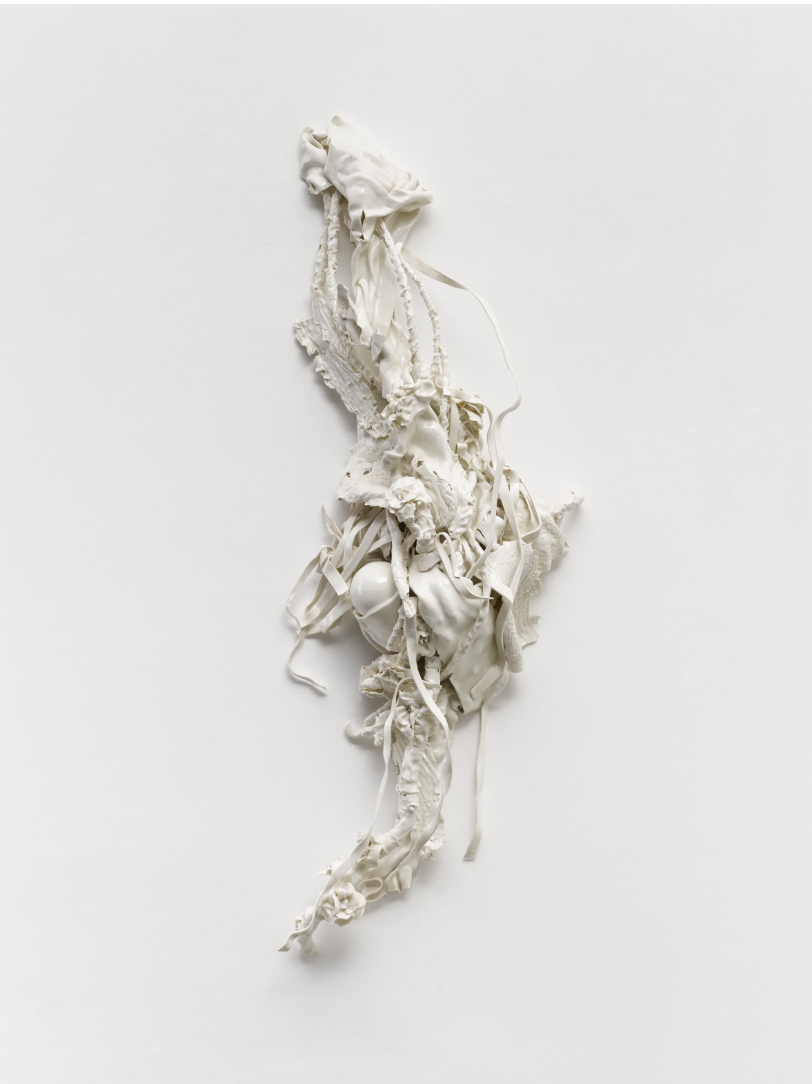
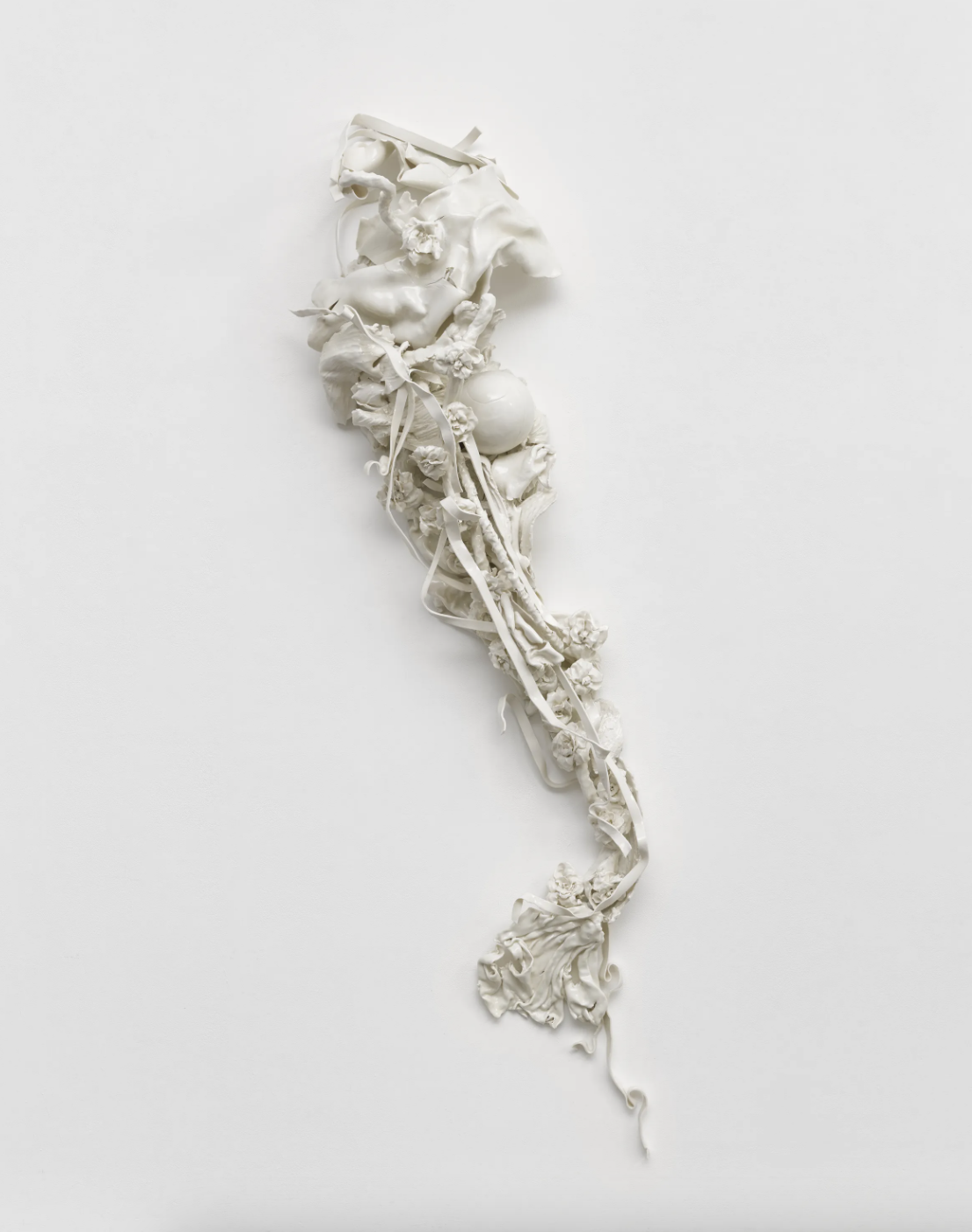
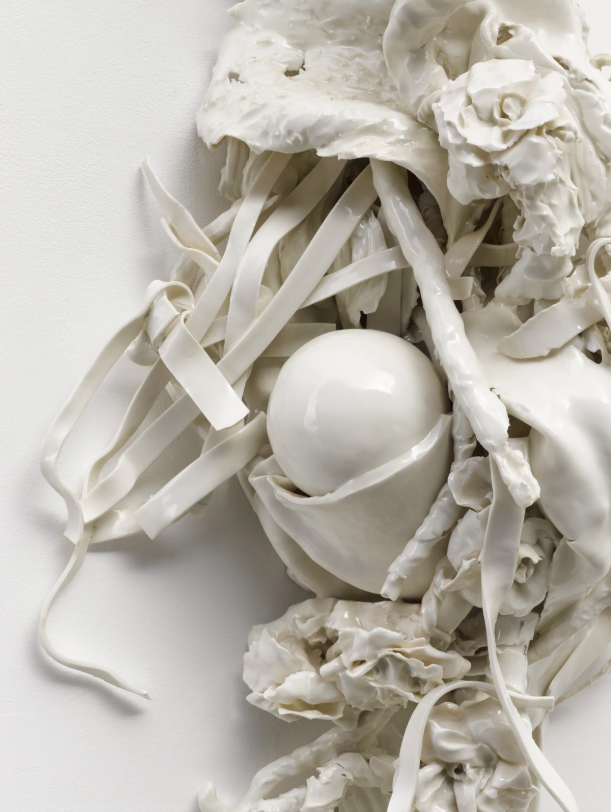
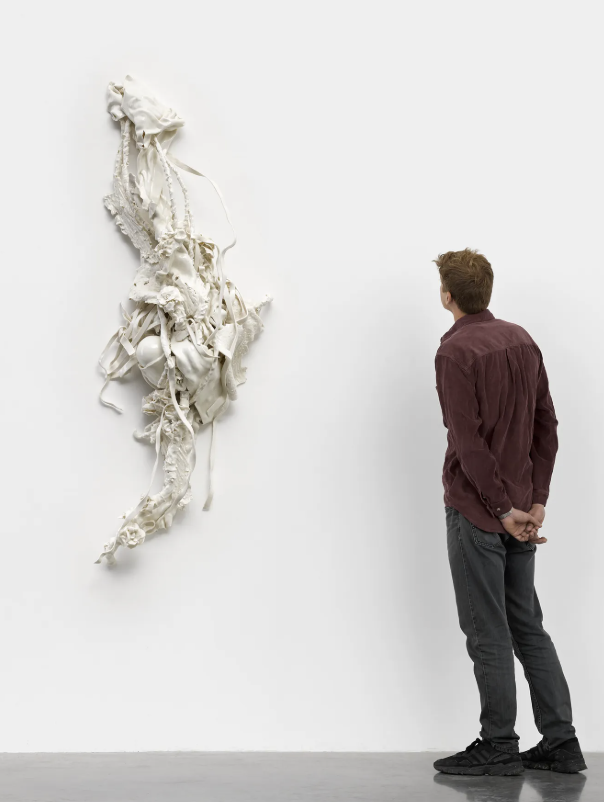
Rachel Kneebone. From the Rapture series, 2014–ongoing. Porcelain wall relief.
PHOTOGRAPHIC DECAL PROCESS
The process begins by printing my images onto specialist ceramic transfer paper. I then cut the shapes by hand, choosing which parts of the photograph to include or remove. The cut decal is placed in water for around a minute, which allows the image to separate from the backing paper. It behaves a little like a temporary tattoo, becoming thin and flexible once released.
When the decal is ready, I slide it onto the glazed surface of the ceramic. Using a soft rubber rib or pieces of cloth, I gently press out any water or air trapped beneath the image. This part is slow and careful, and I think of it as a grounding stage. It is where the image settles into the form of the clay. The photograph stretches, folds or shifts depending on the shape of the piece, which means no two applications are ever the same.
Once the decal is in place, the piece goes back into the kiln for a low-temperature firing. During this firing, the image bonds permanently to the glaze, becoming part of the ceramic surface rather than sitting on top of it. The result is a photograph that feels embedded and tactile, holding both texture and memory.
When the decal is ready, I slide it onto the glazed surface of the ceramic. Using a soft rubber rib or pieces of cloth, I gently press out any water or air trapped beneath the image. This part is slow and careful, and I think of it as a grounding stage. It is where the image settles into the form of the clay. The photograph stretches, folds or shifts depending on the shape of the piece, which means no two applications are ever the same.
Once the decal is in place, the piece goes back into the kiln for a low-temperature firing. During this firing, the image bonds permanently to the glaze, becoming part of the ceramic surface rather than sitting on top of it. The result is a photograph that feels embedded and tactile, holding both texture and memory.
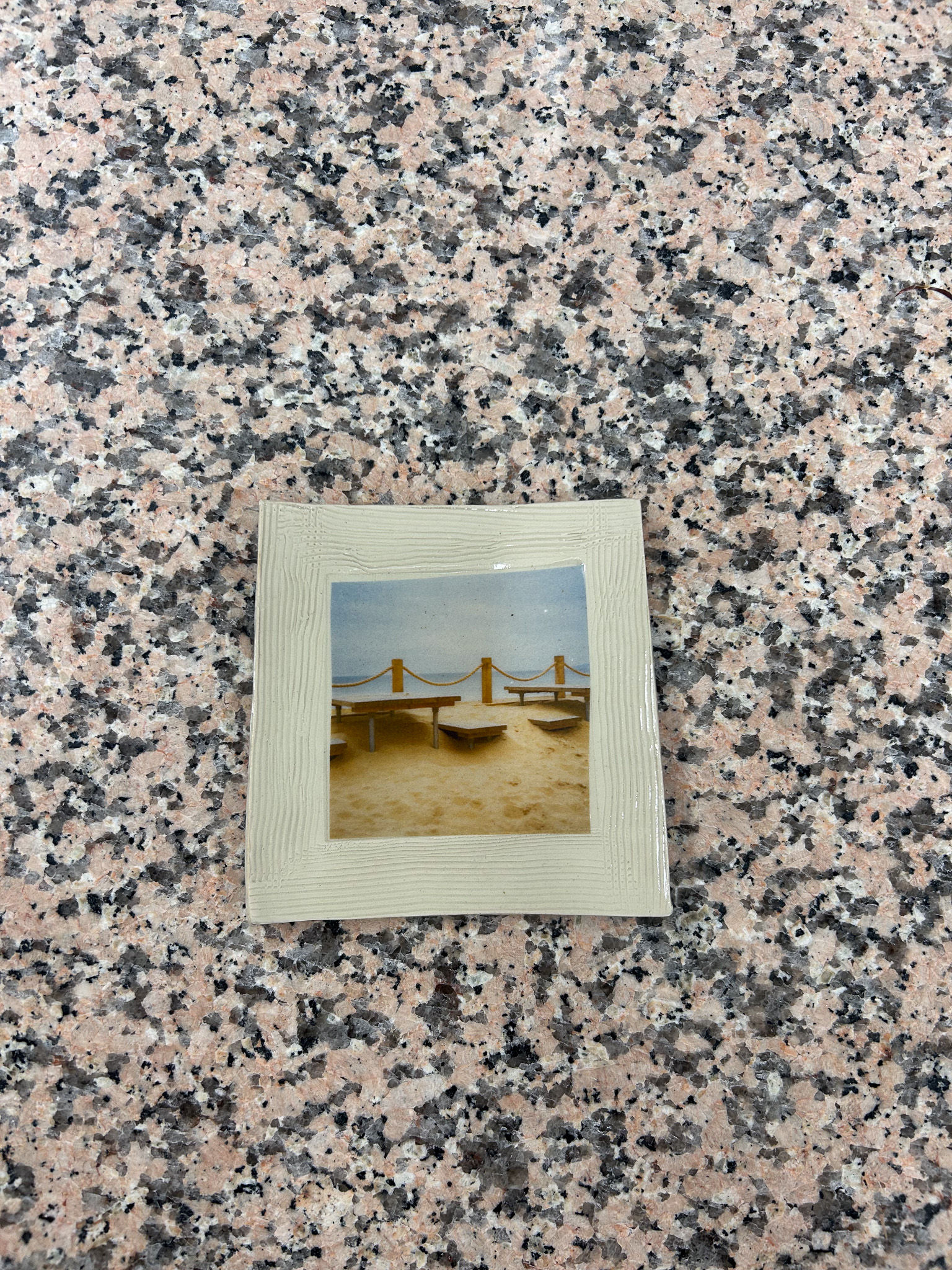
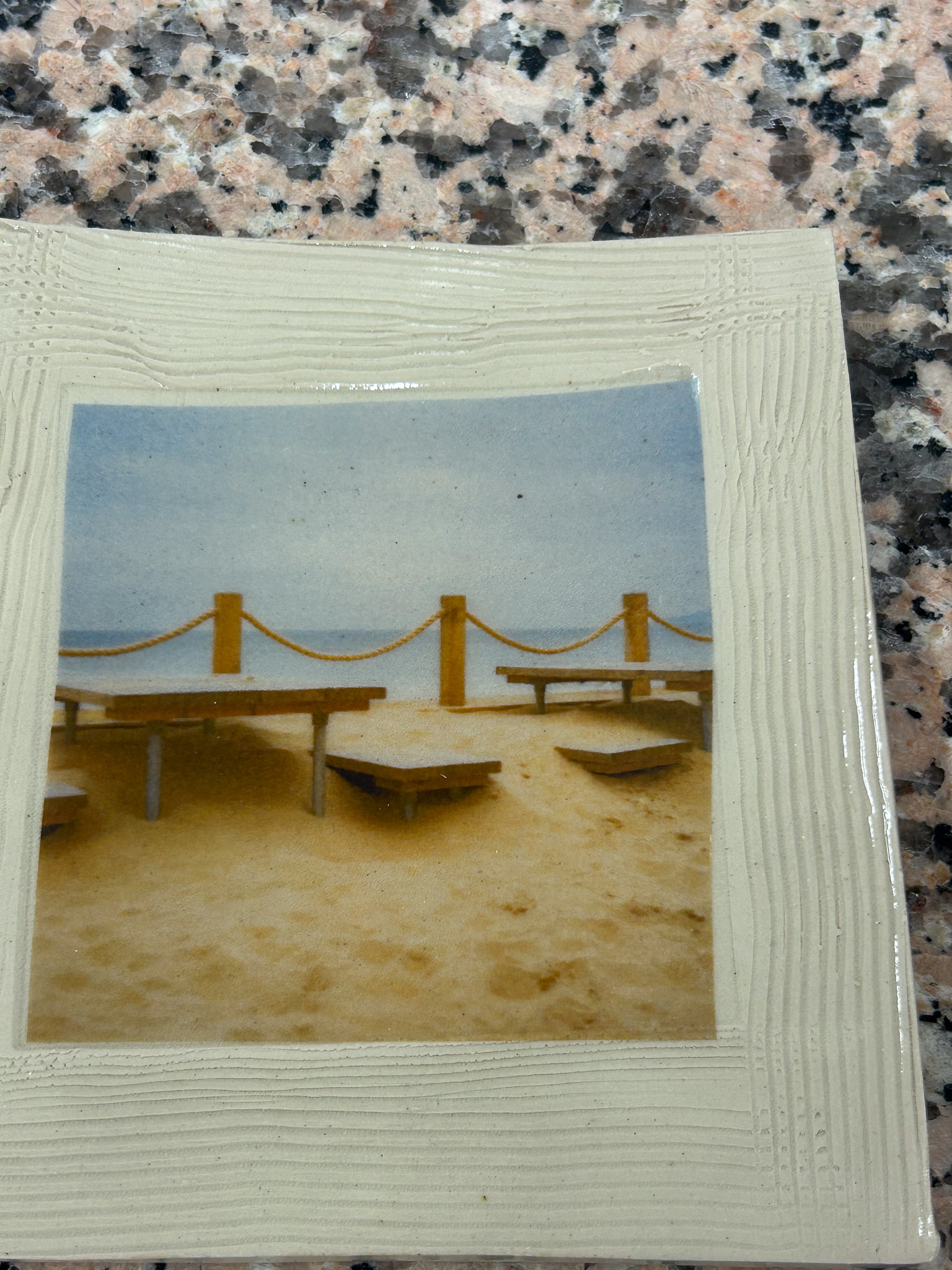
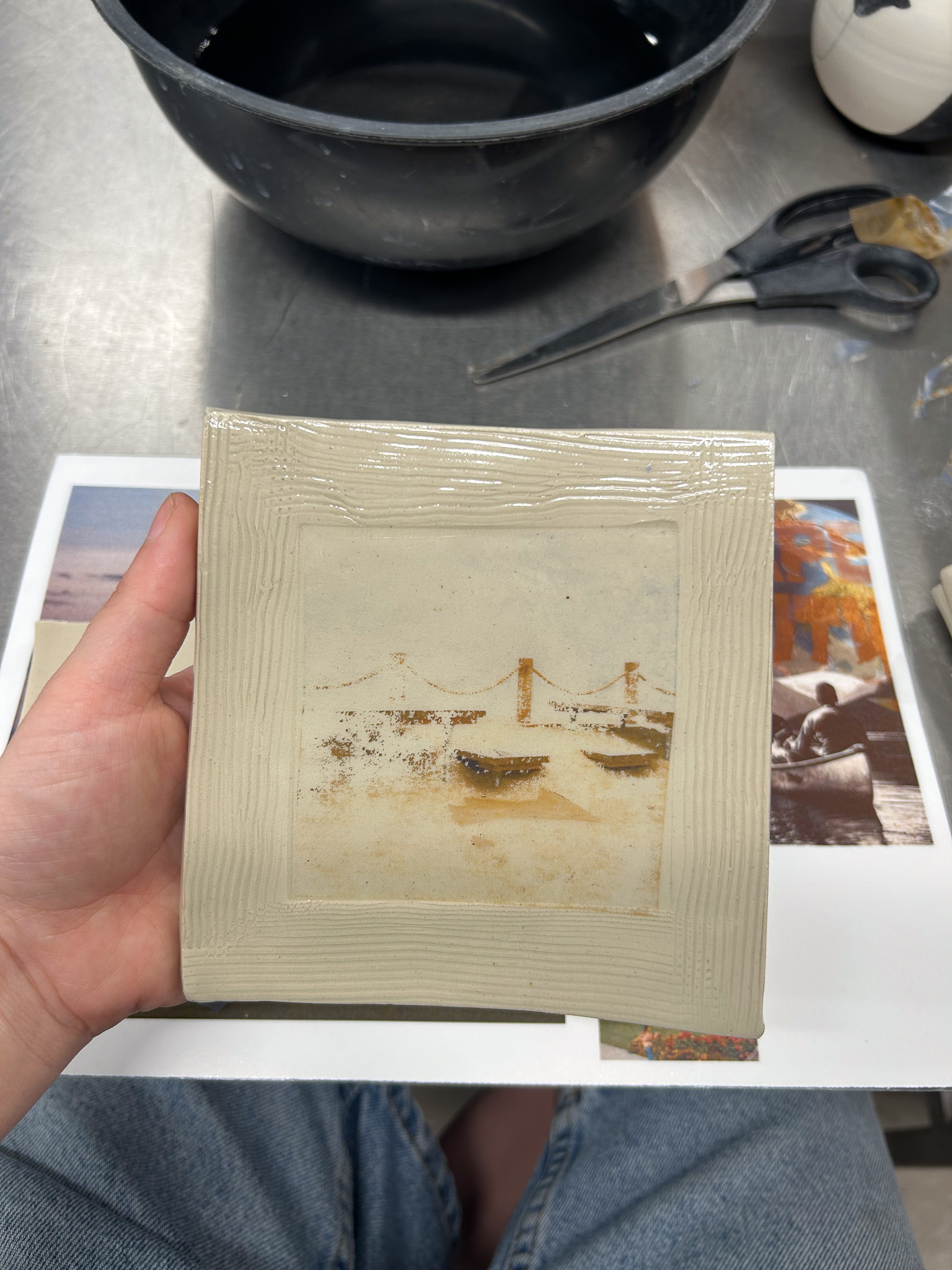
I wanted to keep elements from my Unit 2 process, when Set in Stone really began taking shape. Back then, I started experimenting with destroying parts of the image through burning, ripping and folding, to see how those disruptions could become part of the meaning. I carried that idea forward here by setting the photographic decal onto the ceramic surface, then carefully ripping it away once it had started to set. The faded, partial image that remains feels like a trace or memory, something half-forgotten or unstable. This process reflects the themes I’ve been exploring around fragmentation, missed moments and emotional instability. By allowing the image to break down, I’m embracing imperfection and showing how memory and identity can shift or erode over time.
THE SELECTION PROCESS
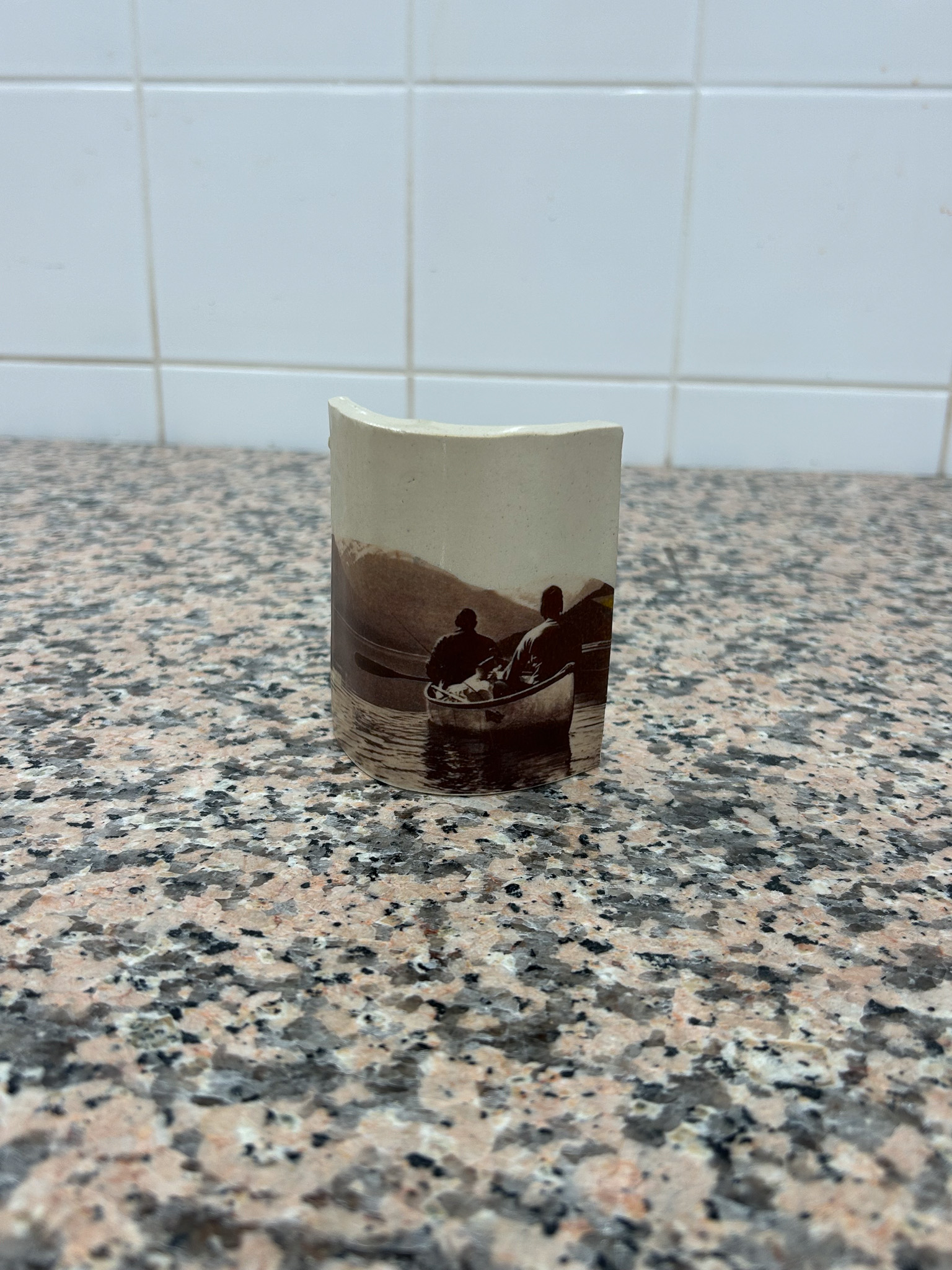
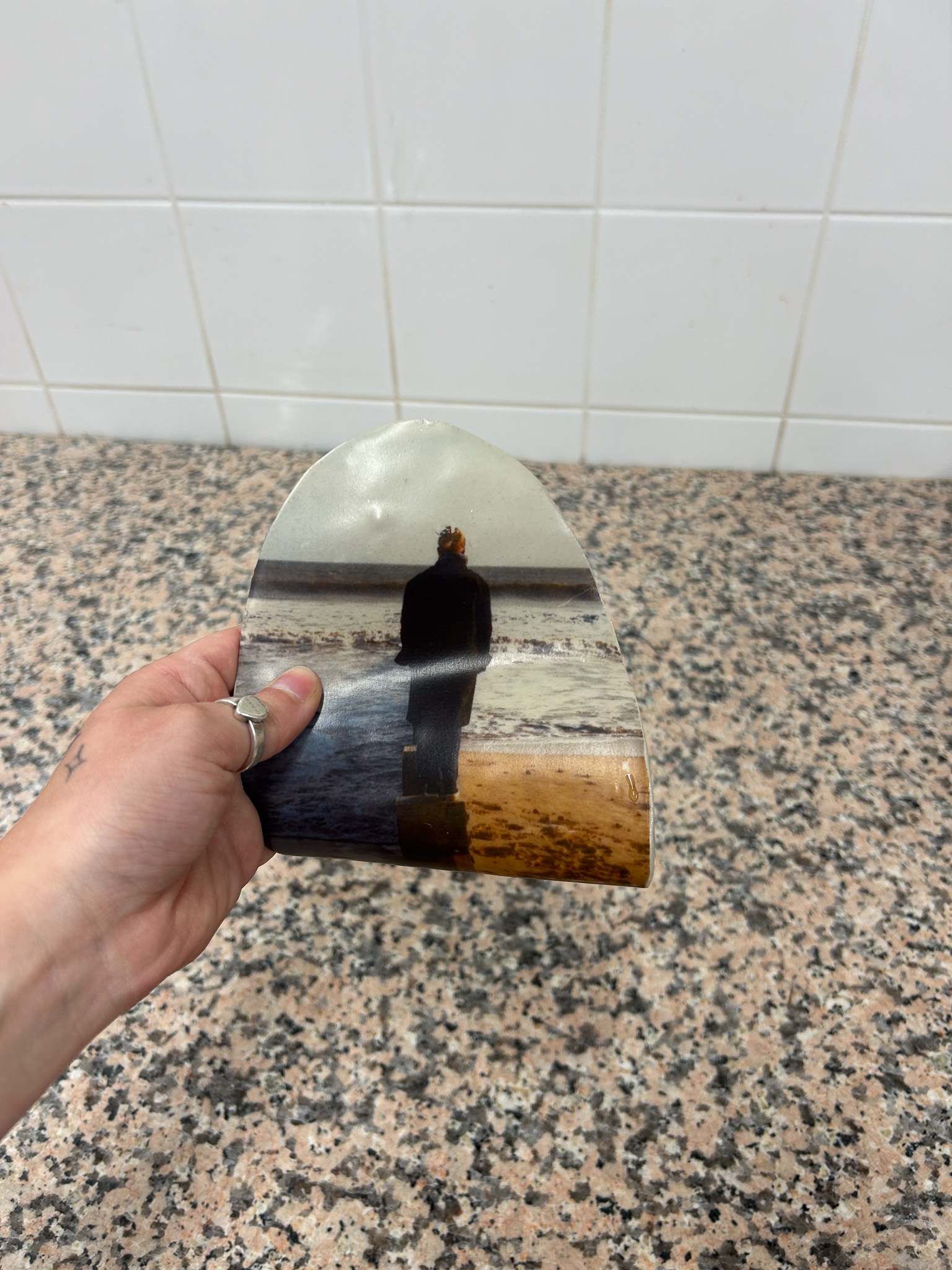
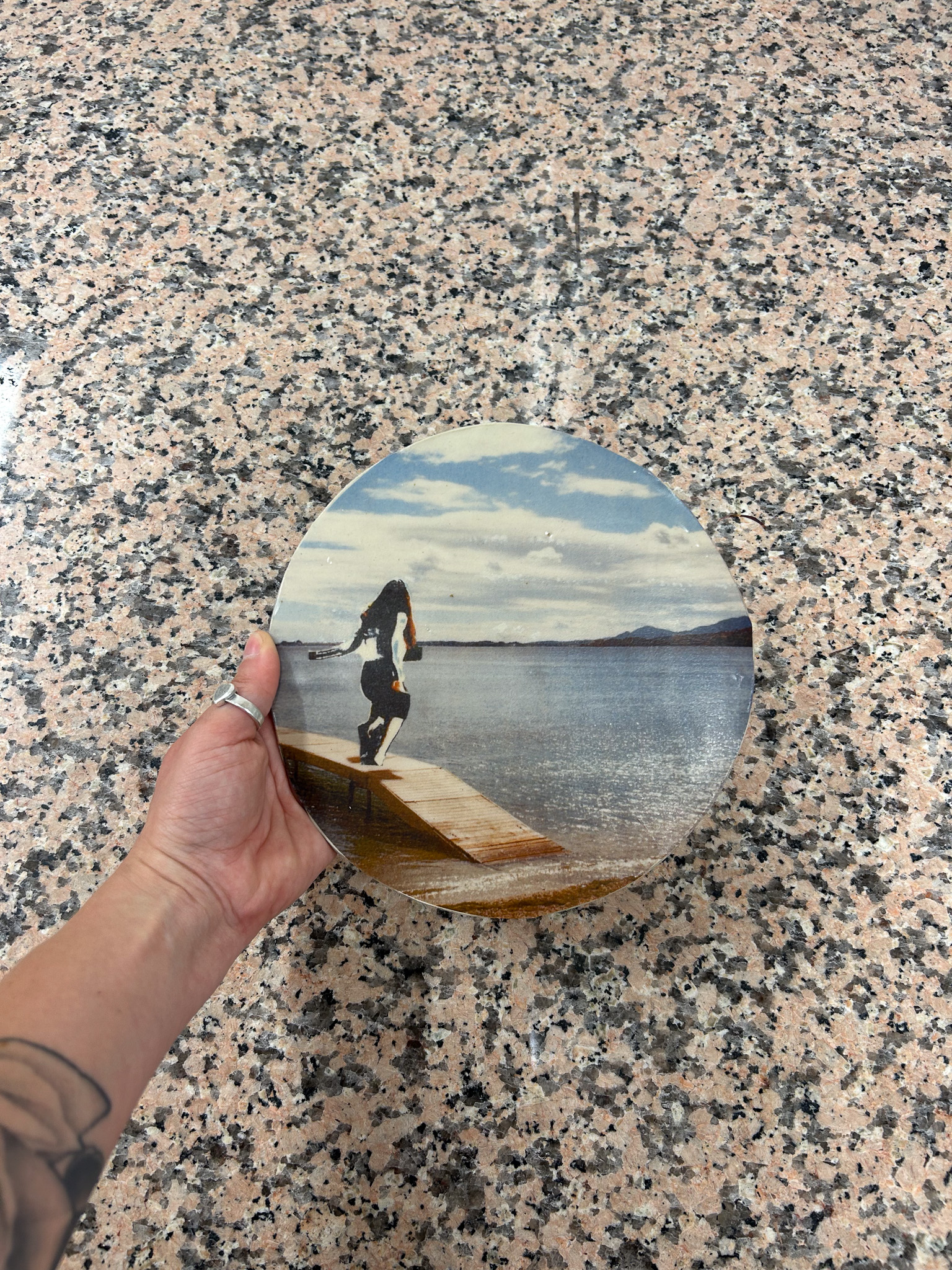
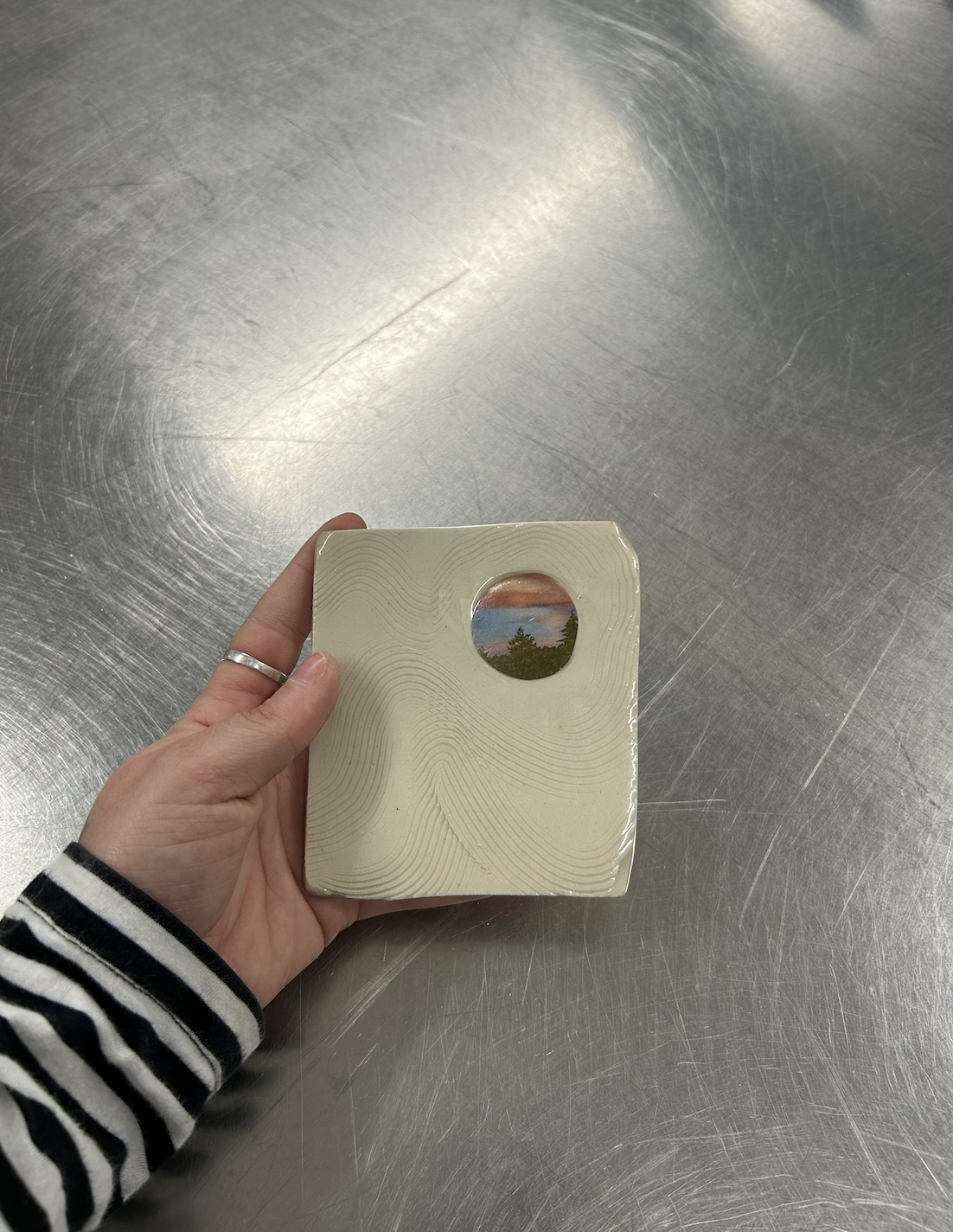
TESTING PROJECTOR & INTERACTION WITH CERAMIC SURFACE
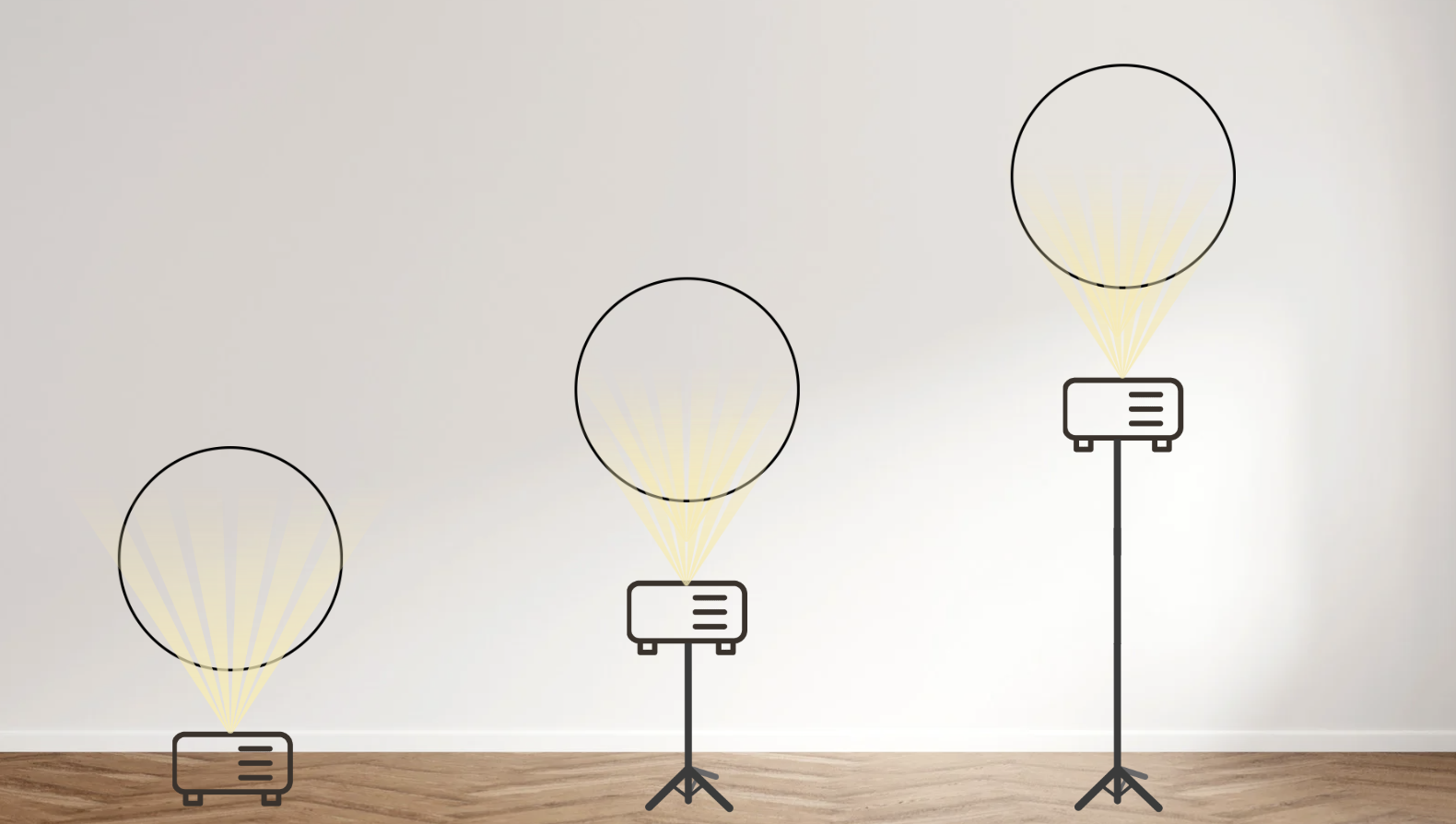
I spent time adjusting the projector height and distance to find the point where the video settled naturally into the circular ceramic surface. When the projection extended beyond the edge of the tile it felt too loose, so I kept the image tightly held within the circle. This made the projection feel more grounded, allowing the ceramic surface to guide the shape of the light. Positioning it centrally helped the piece act as an anchor for the rest of the installation, with the surrounding tiles and collaged surfaces spreading out from that point.

CREATING THE EXHIBTION LAYOUT
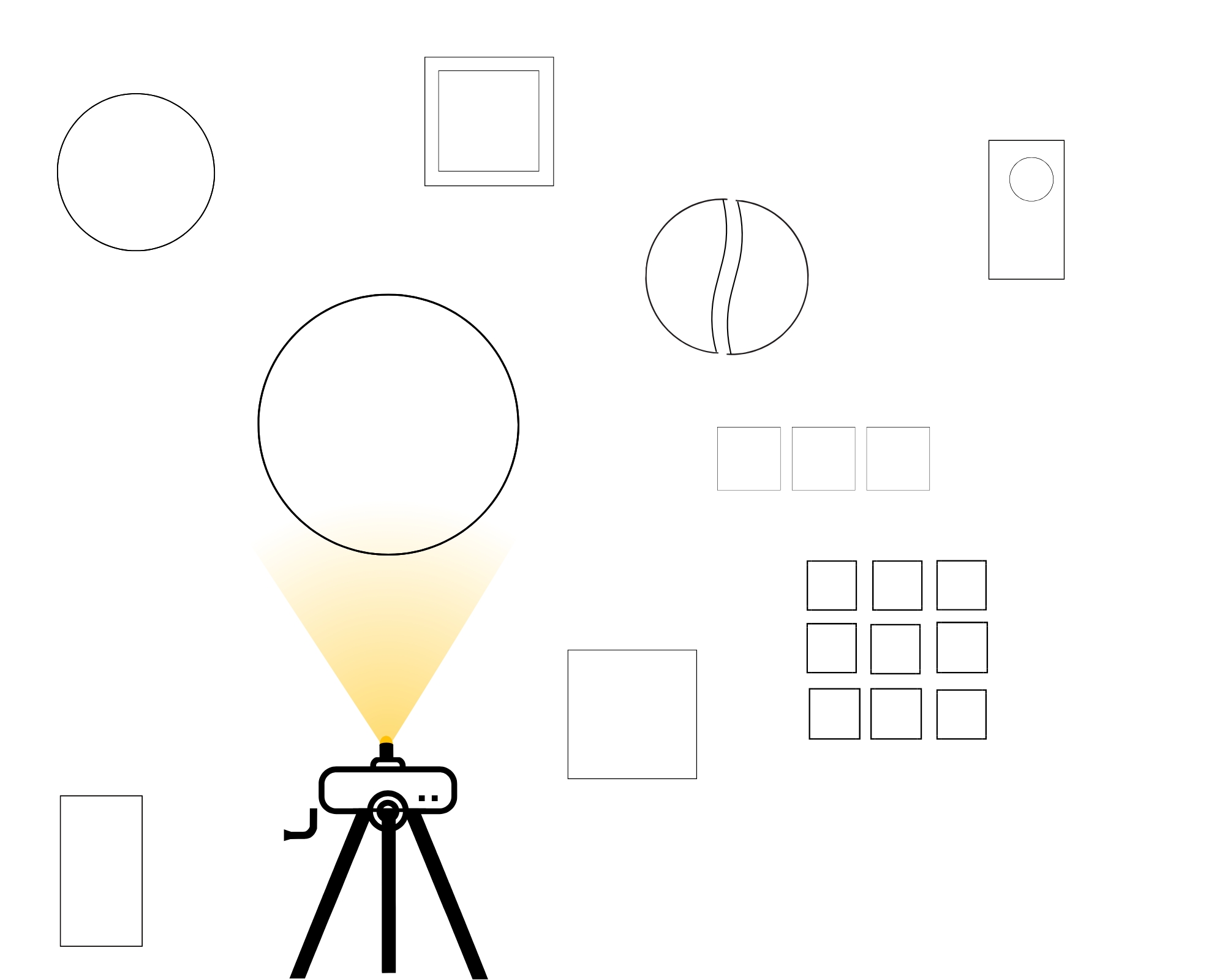
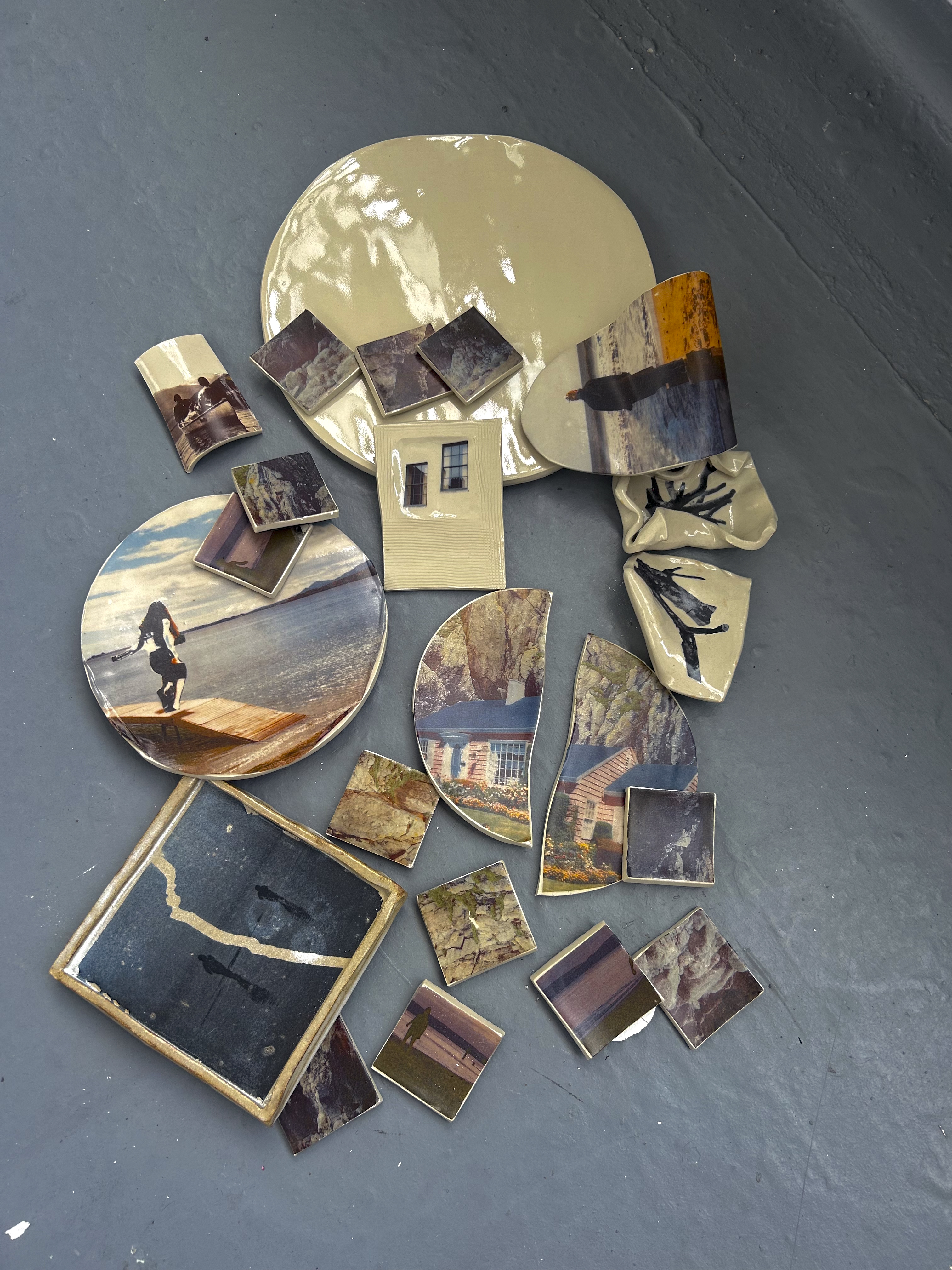
The layout of the work felt really important, especially as this was the first time I included moving image. After feedback from my earlier Set in Stone installation, I wanted to move away from a layout that felt too uniform or commercial. Previously, the pieces were displayed in a straight line on thin shelves, which made them feel more like objects for sale than part of a connected narrative.
With this developed work, I wanted the arrangement to feel more considered and reflective of the themes I explore, like fragmentation, instability and the passing of time. I started by placing the largest circular ceramic slightly off-centre, then gradually built the other pieces around it. This looser, more organic composition allowed each piece to breathe, almost like fragments orbiting one another. The scattered layout reflects how I piece things together through memory and process, and mirrors the sense of chaos, movement and emotional layering that runs through my work.
SIZING

THE FINAL WORK
SET IN STONE. MA SHOW, CAMBERWELL
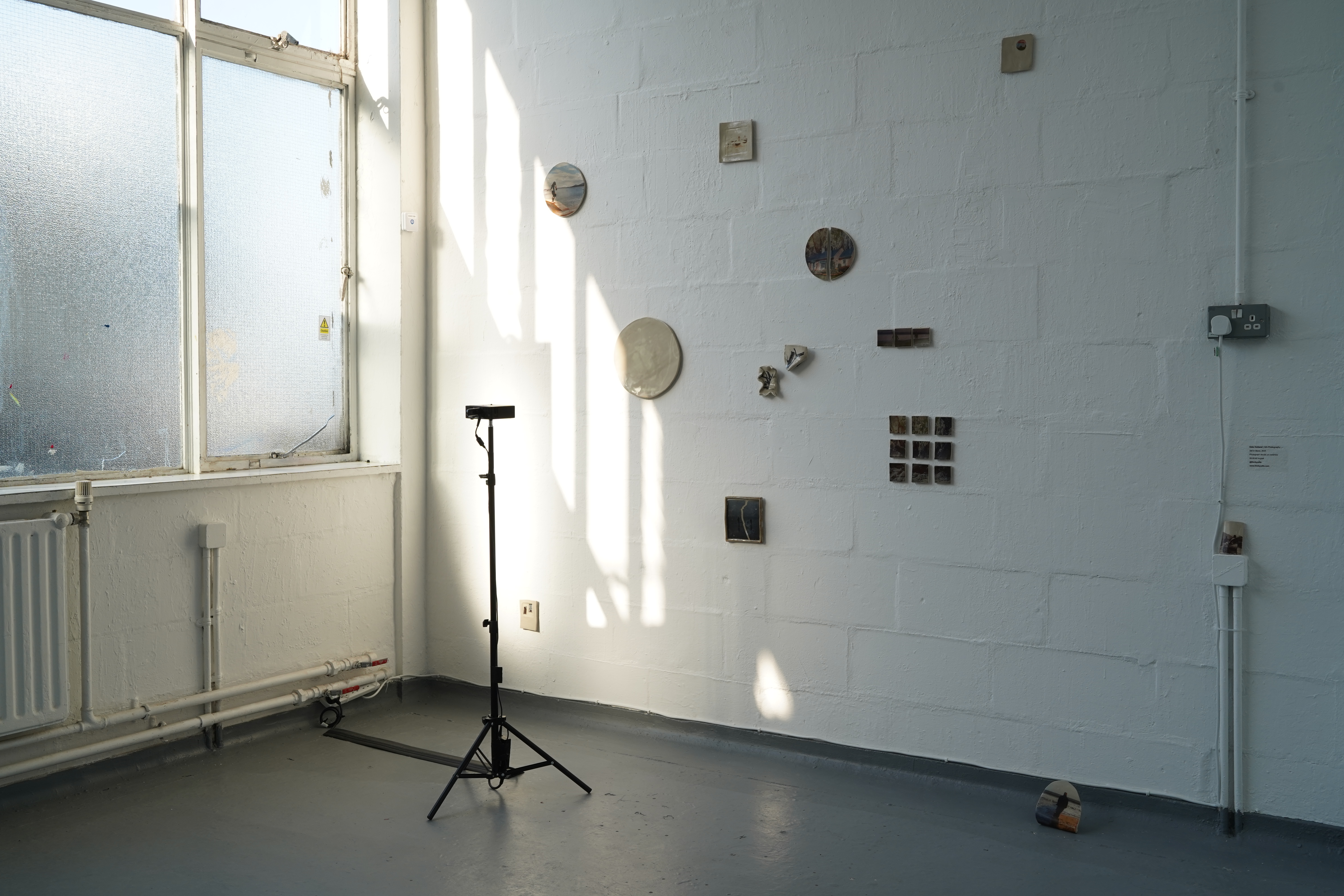
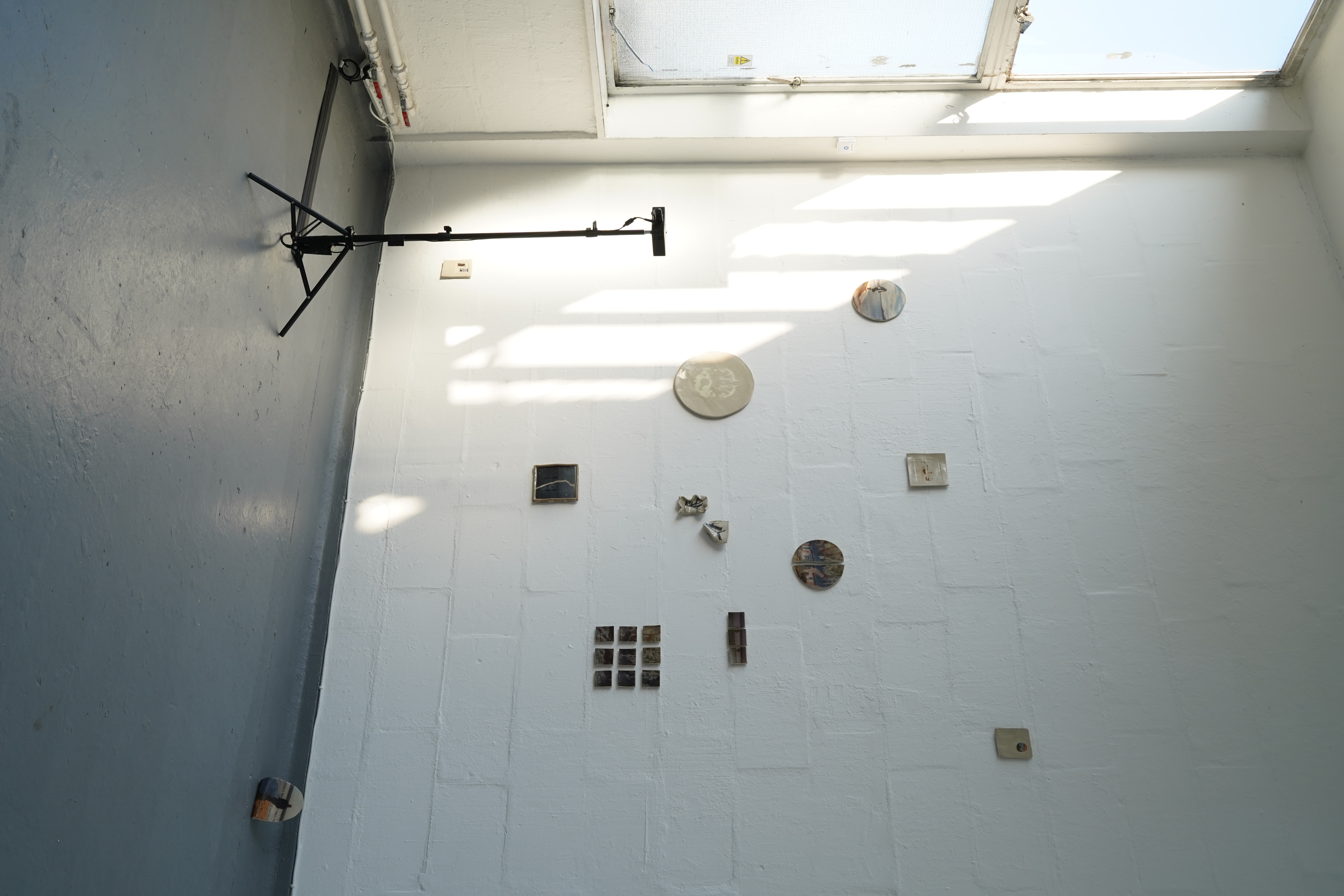
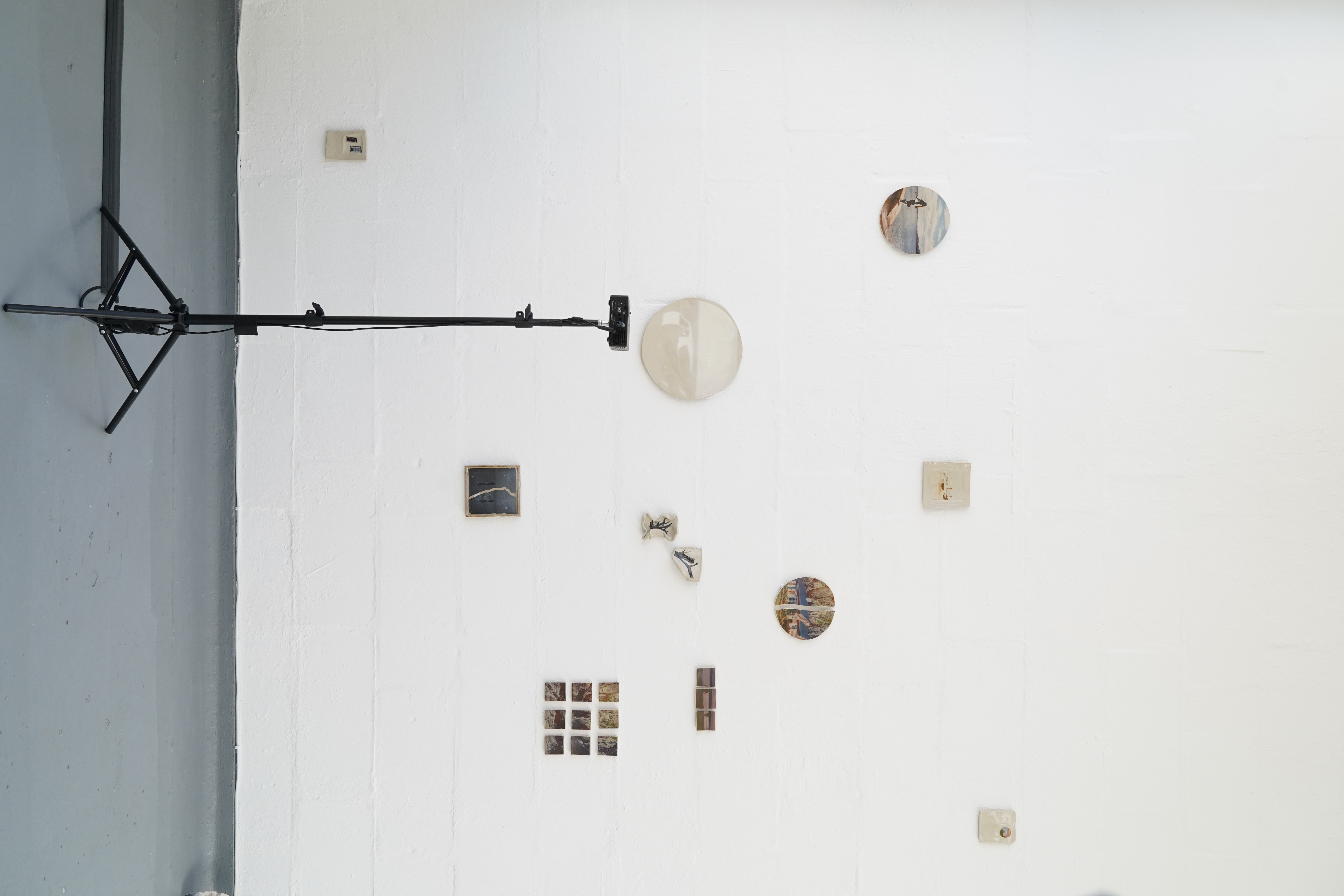
Set in Stone, 2025 | Ceramic installation, photographic collage, and moving image projection
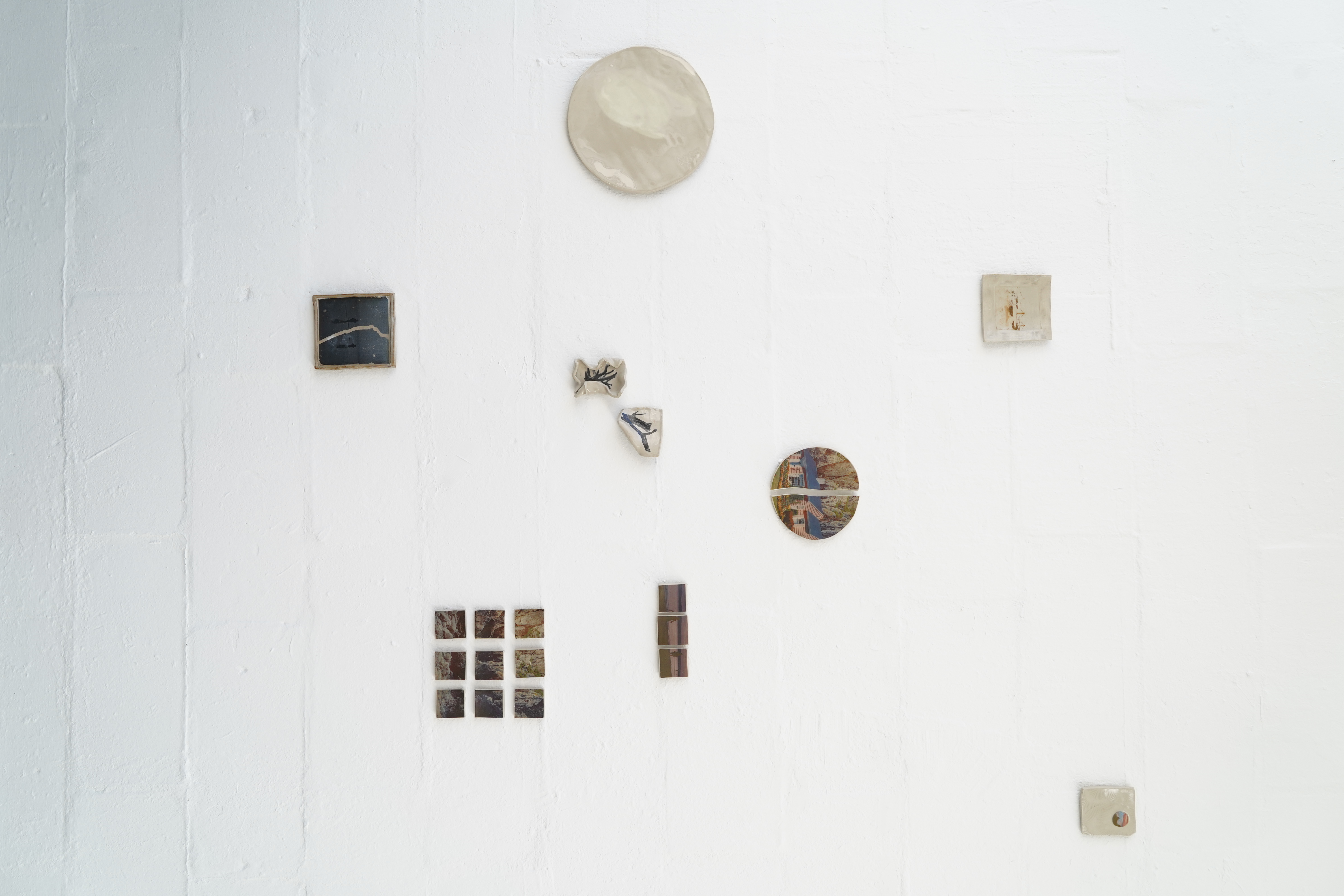
This installation brings together ceramics, photography and moving image to explore how living with ADHD shapes perception, memory and emotion. At its centre, a moving image projection plays across a large ceramic surface, surrounded by smaller fragments of clay printed with collaged photographs. Each piece holds traces of touch and distortion, where images are folded, ripped or reassembled to reflect shifting focus and the fluid way thoughts overlap. The work grew from a desire to construct new visual realities that offer a moment of pause or escape, places where the scattered rhythm of the mind can find a quiet kind of order.
Working with clay became a way to understand emotion through the body, as the material records pressure, hesitation and care. The photographic collages, built from both 35mm film images and vintage magazine cuttings, create imagined spaces that sit between reality and memory. Together, the elements form a fragmented yet connected environment that mirrors how thoughts and experiences overlap in a constantly shifting state. Rather than seeking resolution, Set in Stone embraces imperfection, fluidity and the instability of attention. The work invites viewers into a space that reflects both the tenderness and turbulence of living with a mind that rarely stands still.
Edie Holland
Set in Stone (ceramic works), 2025
Photographic decals fired onto stoneware ceramic
Installation, dimensions variable

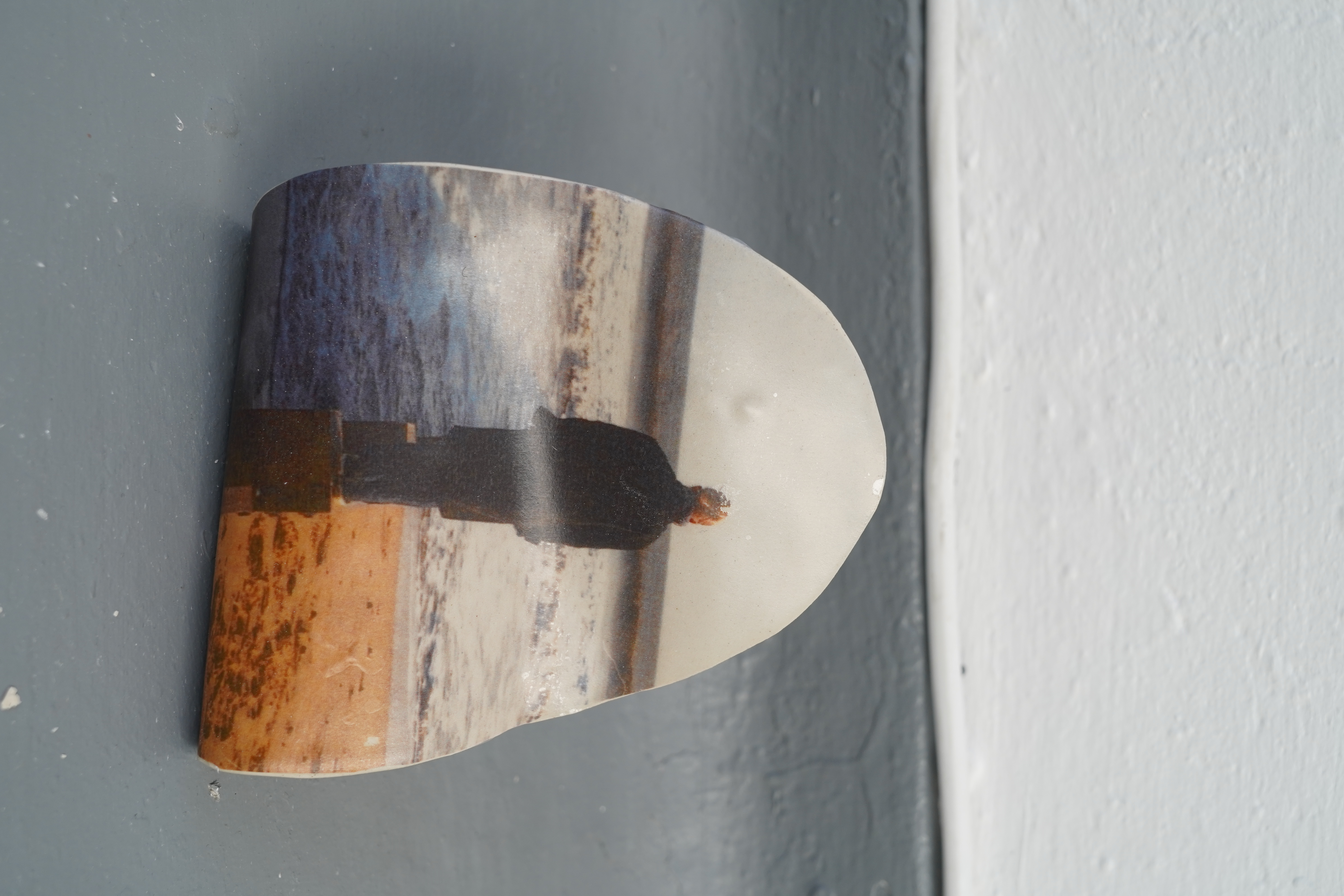


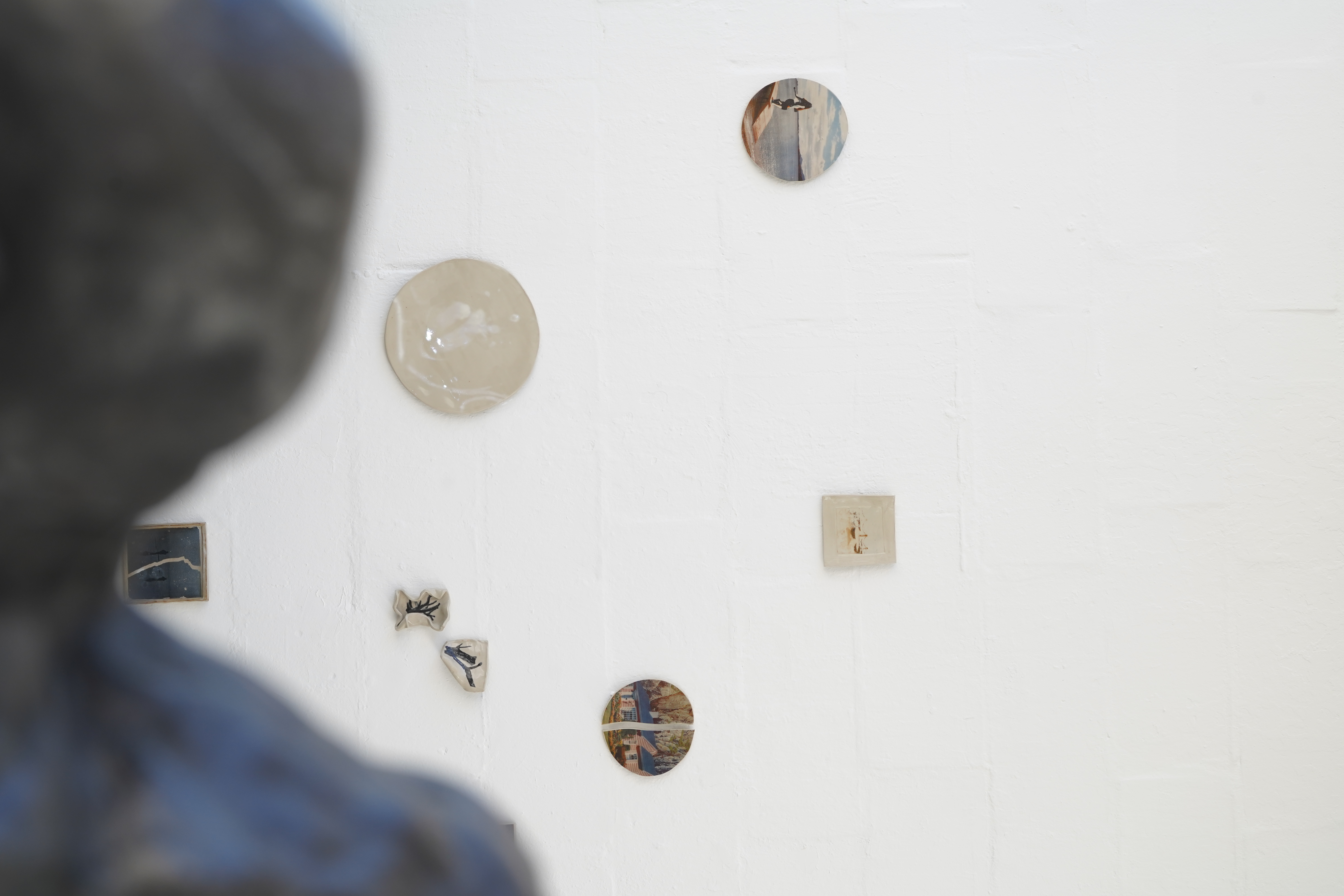
Edie Holland
Set in Stone (video), 2025
Single-channel video, colour, silent, 48 seconds (looped)
Projected onto stoneware ceramic tile, 30cm x 30cm
This video was projected on a loop onto a large stoneware ceramic tile, placed alongside my other ceramic pieces. It shows a series of moments that reflect how my mind shifts between states with ADHD and anxiety. A bumblebee slowly taking nectar, a flower opening in its own time, a car accelerating fast, a snake hunting, a heart beating quickly. All of these images move between calm and chaos. Sometimes there is a rising tension, other times a feeling of pause, and often both are present at once. The video is in black and white, which makes the contrasts sharper and focuses attention on the rhythm rather than colour.
Projecting onto ceramic instead of a plain wall mattered to me. The surface of the stoneware interrupts the image slightly, breaking it up and giving it a more fragile, imperfect quality. That felt important because it echoes the fractured but still held together feeling that runs through this body of work. The loop also mirrors how these states come back again and again, thoughts racing then slowing then racing again. A bit like that fight or flight feeling.
Artists such as Tony Oursler have shown how projecting moving images onto physical surfaces can create a different kind of presence, where the image feels embodied rather than detached. For me this connection to materiality was central, as the clay and the projection work together to hold the tension between the tangible and the fleeting. Where the clay tiles with photographs are solid and permanent, the video feels unstable and temporary That is at the heart of Set in Stone: trying to ground scattered thoughts through making while also acknowledging that nothing ever stays completely still.